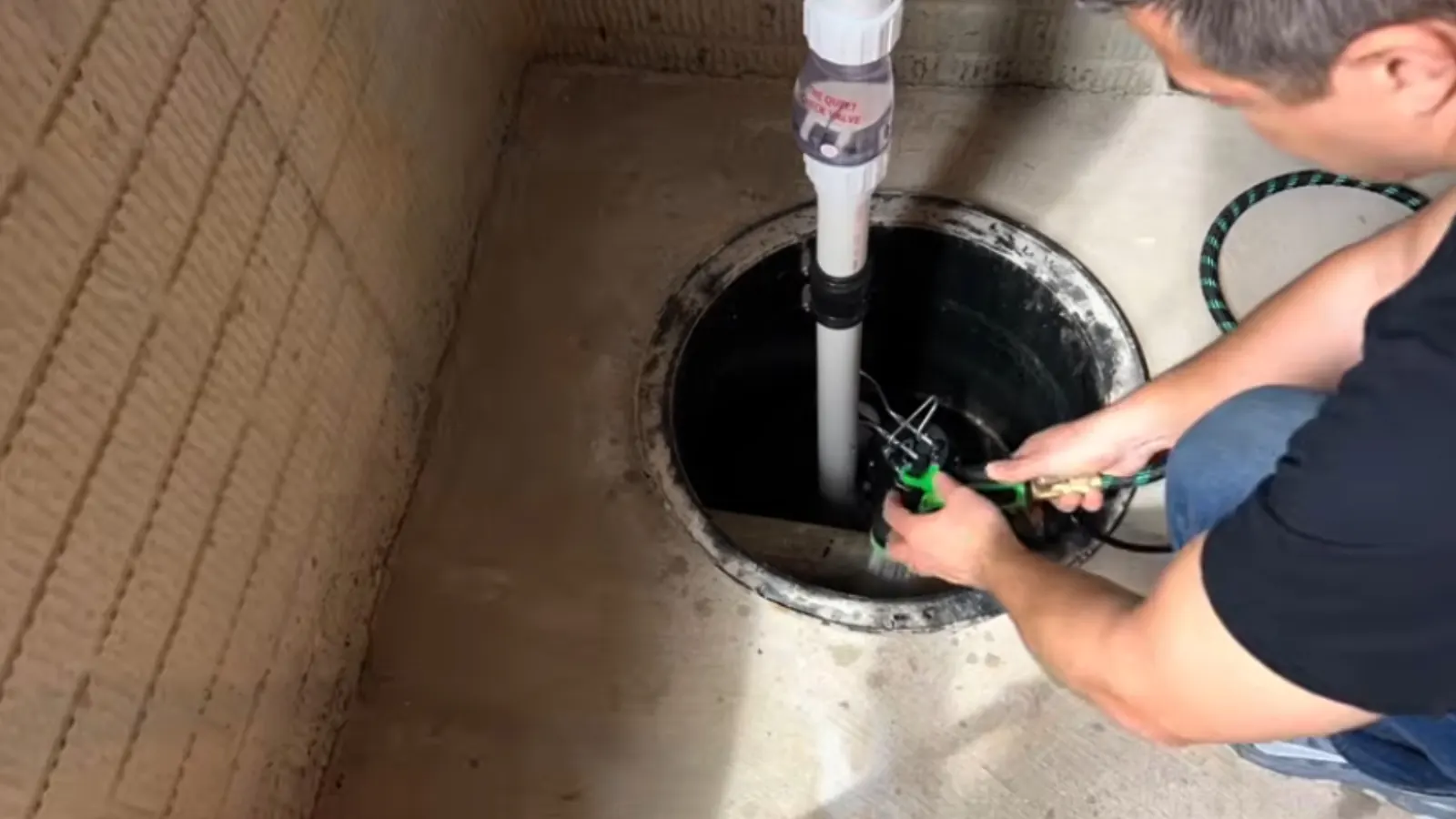
The parts of a sump system
The pit, or basin, is a hole in the floor lined with a plastic or concrete liner, deep enough for the pump to sit and for water to collect. The pump sits in the pit and switches on when a float lifts. A discharge pipe carries the water out of the house, and a check valve in that pipe stops the water falling back into the pit.
A sealed lid keeps debris and radon-bearing air out of the basement. A battery or water-powered backup runs the pump when the power fails or the main pump dies. An alarm can warn you when the water rises too high.
Pump types and what they suit
The choice affects noise, lifespan and cost.
| Type | How it works | Pros | Cons |
|---|---|---|---|
| Submersible | Sits in the pit under water | Quiet, handles debris, does not clog easily | Harder to service, costs more |
| Pedestal | Motor above the pit, pump below | Easier to reach, lower cost | Louder, shorter life in many cases |
| Battery backup | Runs on a deep-cycle battery | Works in an outage | Battery needs checking and replacing |
| Water-powered backup | Uses water pressure to pump | No battery needed | Needs municipal pressure and uses water |
| Ejector pump | Lifts waste from a basement bathroom | Handles solids | A different job from a sump pump |
A pump that is installed well runs quietly for years. Call and we will plan the system for your basement.
Call (860) 397-8103How an installation is done
Locate the pit
We find the low spot where water collects, or the point where an interior drain will end. The pit goes there, away from footings and utilities.
Cut the slab and dig the pit
We cut a hole in the concrete, dig to the needed depth, set the liner and place gravel at the bottom so water can enter.
Set the pump and the check valve
The pump goes into the liner and the discharge pipe goes up through the check valve. The float must move freely and not touch the wall.
Run the discharge
The pipe leaves the house and ends where water can drain away from the foundation. It should slope and be protected from freezing and from being blocked.
Wire, test and seal
The pump plugs into a dedicated GFCI outlet. We fill the pit with water, test the float and the valve and seal the lid.
The discharge line decides whether the system works
Water pumped out of the house has to go somewhere that is not back toward the foundation. A discharge that ends a few feet from the wall can seep back into the soil and into the pit, so the pump runs again and again. The pipe should carry the water well away, to a slope, a dry well or a drain where it is allowed.
In a freeze, the discharge can ice over and block. A pipe that slopes down and ends with an open or relief outlet reduces the risk. We also avoid sending the water to a neighbor's property or to the sanitary sewer, which is not allowed in most places.
Backup options worth considering
A pump alone is not protection during a storm outage.
- <strong>Battery backup.</strong> A second pump runs on a battery when power fails, for hours, depending on use.
- <strong>Water-powered backup.</strong> It uses water pressure and works as long as the supply holds.
- <strong>Generator.</strong> A standby or portable generator can run the pump and other loads.
- <strong>High-water alarm.</strong> It warns you before the pit overflows.
- <strong>Regular testing.</strong> Pour water into the pit and make sure it runs, a few times a year.
What to ask a contractor
Ask what pump and basin they will install, and why. Ask where the discharge will go and how it avoids freezing. Ask about a backup, and what it costs. Ask whether the electrical work is included, and who handles any permit. Get the scope in writing, with the price for the pump, the pit, the discharge and the finishing.
A fair contractor looks at the water problem first and explains if the pump alone will do or if a drain system is needed. For repairs and replacements, see sump pump repair, and for the larger picture, basement waterproofing.
Maintenance that keeps the system alive
Test the pump every few months and before the wet season. Clean the intake screen if the pump has one, and make sure the float moves freely. Check the discharge outlet outside for blockage. Replace the backup battery as the maker advises, and keep the lid sealed.
A pump that runs constantly or cycles often is a sign of too much water, a stuck float or an undersized pump. Do not ignore it. A pump that works hard in dry weather may be pumping the same water around, and a plumber can find the cause.
Electrical and safety details people forget
A sump pump should have its own GFCI-protected outlet, not a shared extension cord. Plug it in where water cannot reach the outlet, and avoid running the cord across the wet floor. If the pump needs a hardwired circuit, an electrician should do it.
Make sure the lid is secure, because an open pit is a hazard for children and pets. Label the breaker so anyone can find it in an emergency, and keep a flashlight near the pit. Test the alarm and the backup together, so you know the whole system works.
Code and electrical notes
Discharge piping follows the 2021 International Plumbing Code (IPC), which the 2022 Connecticut State Building Code adopts, and the outlet and wiring follow electrical code. Never run a cord through standing water. The Connecticut Department of Consumer Protection licenses plumbers, so you can ask any plumber about their license before work starts.
Sump systems in the Enfield area
Enfield sits along the Connecticut River, and the Scantic River and Scantic River State Park lie to the south, so low basements see more groundwater after storms. Ask the Enfield building office what permit and electrical rules apply to a new pit and pump, and where a discharge is allowed to go. Digging outside the foundation requires notice to Call Before You Dig at 811 at least two full business days ahead.
We install and repair pumps in Enfield and in nearby Somers and Suffield, and you can verify any plumber or electrician at the state's elicense lookup at elicense.ct.gov.
Sump pump installation questions
If your basement floods during outages, yes. A backup keeps the pump running when the power is out.
Well away from the foundation, on ground that slopes away, to a place where the water can drain. Not to the sanitary sewer or a neighbor.
It depends on the water coming in and the height it has to lift. We size it after we see the pit and the discharge route.
Often a day, if the pit is new and the discharge is simple. A full interior drain takes longer.
A submersible pump is quiet. A pedestal pump makes more noise, and a sealed lid dampens it.