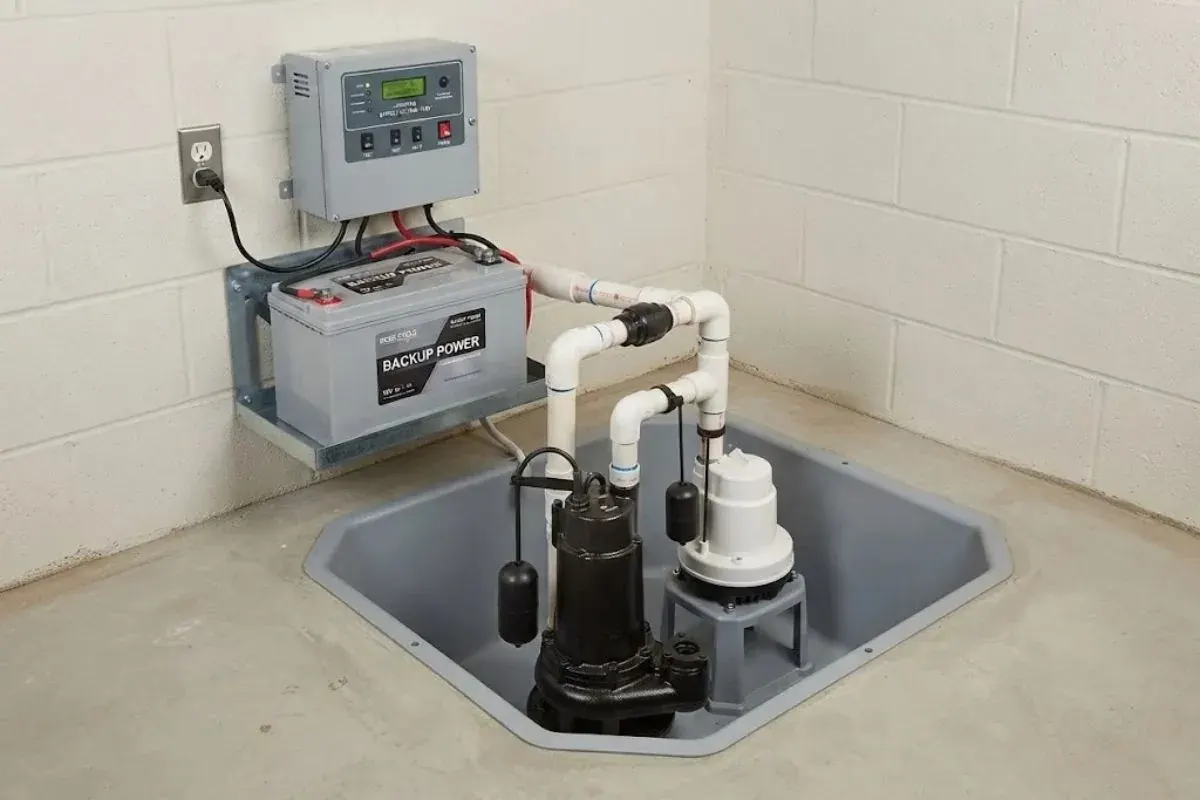
Sump pump failure: when a basement is taking on water
A sump pit that is full and a pump that is silent, or one that runs without moving water, means the basement will flood. Every minute matters, and the right first move depends on whether you can still reach the electric panel safely.
Take these steps while we are on the way.
- Check that the pump is plugged in and the breaker or GFCI has not tripped.
- Lift the float by hand, and if the pump runs, the float is the problem.
- Move boxes, rugs and electronics off the floor and away from the water.
- Stay out of standing water if outlets or the panel are wet.
- Call (860) 397-8103 and say whether the pump hums, runs or does nothing.
Why sump pumps fail
The most common causes are a stuck float switch, a failed motor, a clogged intake screen, a check valve that has stopped working and a power outage during the storm that overloaded the grid. Pumps also wear out from age. A pump that cycles constantly or runs for hours may be undersized for the water coming in.
A battery backup keeps the pump running when the power goes out, and a water-powered backup is another option where the supply allows. We discuss which fits your basement and your risk.
A failed pump in the middle of a storm is the call we want first. Dispatch is open now.
Call (860) 397-8103Symptom, cause and fix
Most pump failures have a short list of causes.
| Symptom | Likely cause | Typical repair |
|---|---|---|
| Pump does nothing | No power, tripped GFCI or failed motor | Reset, replace the pump |
| Pump hums but does not pump | Jammed impeller or blocked intake | Clear the intake or replace |
| Pump runs constantly | Stuck float or undersized pump | Adjust or replace the float or pump |
| Water flows back into the pit | Failed check valve | Replace the check valve |
| Pump fails in a power outage | No backup power | Add a battery or water-powered backup |
Installing a sump system
A new system starts with the pit. A sump basin collects water from the perimeter drain or from the slab, a pump lifts it and a discharge pipe carries it away from the house. The discharge has to drain well away from the foundation, or the water you pump out returns to the pit.
We choose the pump size from the basin and the water volume, install a check valve and a sealed lid, and test the system with water. Where the water problem is bigger than one pump can handle, basement waterproofing looks at the source.
What affects the price of sump pump repair or installation
Repairs are quoted by part. Installations are quoted by scope.
Code and electrical notes for sump pumps
Sump pump discharge and piping follow the 2021 International Plumbing Code (IPC), which the 2022 Connecticut State Building Code adopts, and the electrical supply follows the electrical code. Use a properly grounded outlet and never run a cord through standing water. The Connecticut Department of Consumer Protection licenses plumbers, so you can ask any plumber about their license before work starts.
Sump pumps in Enfield's river valley basements
Enfield lies along the Connecticut River, with the Scantic River in the south, and the water table in low-lying neighborhoods rises quickly after heavy rain. Basements near those rivers and brooks are the ones most likely to take on water when a pump fails.
A pump that serves a house on a hill is a different job from one near the river, and we size accordingly. We also install and repair pumps for homes in Windsor Locks and East Windsor.
Sump pump questions
Yes. A failed pump with rising water is dispatched as an emergency 24/7, including during storms.
Pour water into the pit until the float lifts and the pump runs, and check that it empties the pit and shuts off.
If the basement floods during outages, yes. A backup runs the pump when the power is out.
It depends on use and water. A pump that runs often wears out sooner, and we suggest testing it each year.
It lifts waste from a basement bathroom up to the main drain. It is a different pump than a sump pump.