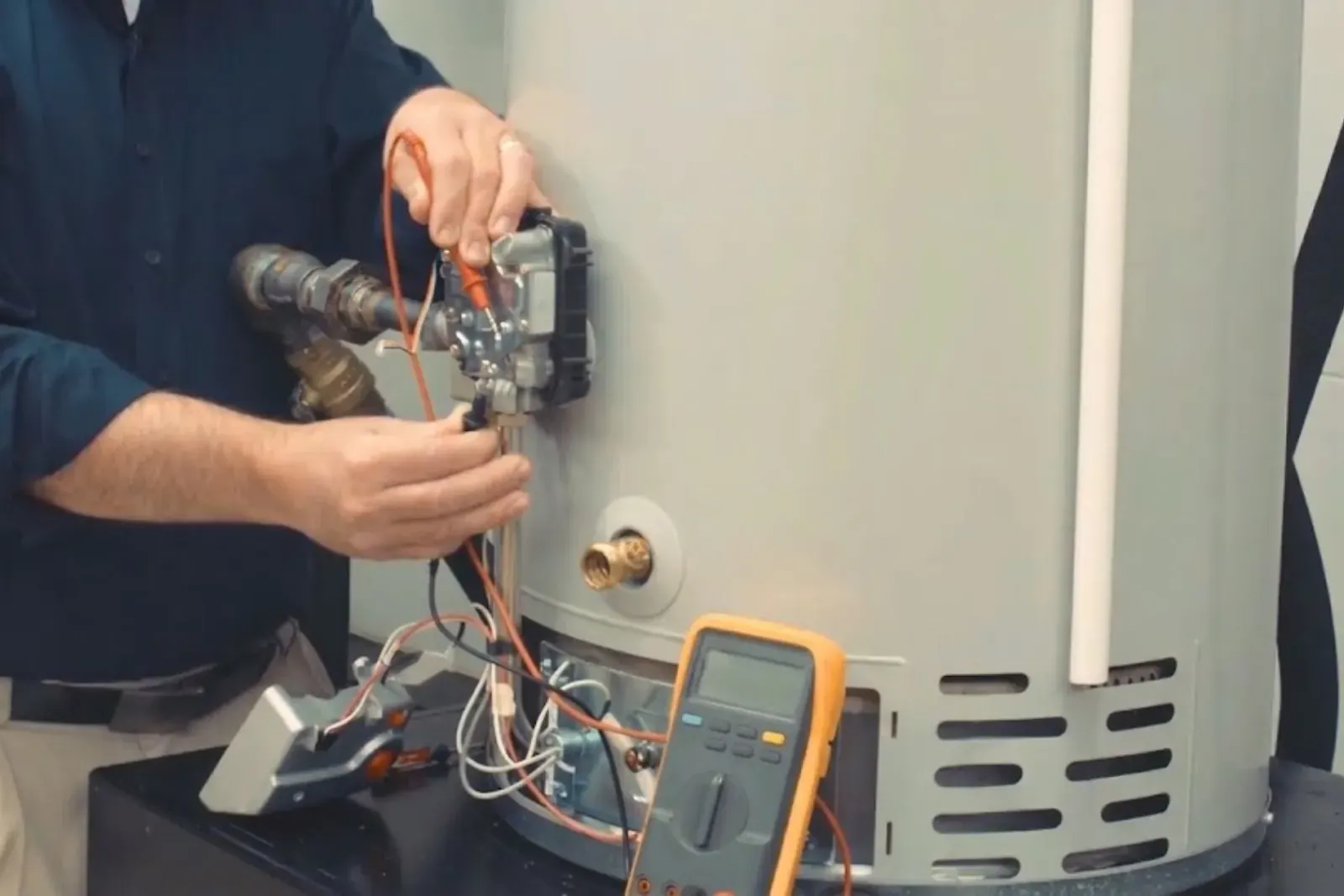
When a water heater problem is an emergency
Three situations need a fast response: water leaking from the tank body, a gas smell near the heater, and a relief valve that keeps discharging. Anything else, such as lukewarm water or a noisy tank, is a repair we can schedule.
Gas comes first. If you smell gas, leave the building and call your gas utility or 911 before you call a plumber.
- Shut the cold water supply valve on the pipe above the tank.
- Turn an electric unit off at the breaker. Turn a gas unit's control to off or pilot.
- If you smell gas, do not touch switches. Leave the house and call your gas utility or 911 from outside.
- Put a bucket or towels under a slow drip and move stored items off the floor.
- Call (860) 397-8103 and tell dispatch the fuel, the age and where the water is coming from.
Gas, electric or hybrid: what usually fails
On a gas tank, the common faults are a dirty or failing thermocouple, a pilot that will not stay lit, a gas control valve that has worn out and a burner that sooted up. On an electric tank, the heating elements and thermostats fail, and a tripped high-limit switch looks like total failure when it is a simple reset.
Hybrid heat pump models add a compressor, a fan and a condensate drain to the list, which is why a hybrid that stops heating is worth a proper diagnosis before anyone orders parts.
No hot water in November is more than an inconvenience. Call and we will sort repair from replacement over the phone.
Call (860) 397-8103Leaks: where the water comes from decides everything
Water at the base of the tank is not always the tank. A loose supply fitting, a dripping relief valve discharge pipe, a failed drain valve and condensation on a high-efficiency unit all put water on the floor. We trace it to the source before we say the word replacement.
If the water is coming through a seam in the tank itself, the steel has failed and no part will fix it. At that point the honest recommendation is water heater replacement, and we explain why with the evidence in front of you.
Symptom, likely cause and repair
Use this to understand what the plumber will check first.
| Symptom | Likely cause | Typical repair |
|---|---|---|
| No hot water at all (electric) | Tripped breaker, failed element or thermostat | Reset, then replace the failed part |
| No hot water (gas) | Pilot out, bad thermocouple or gas valve | Clean, relight or replace the part |
| Water not hot enough | Failed lower element or broken dip tube | Replace element or dip tube |
| Rumbling or popping noise | Sediment layer in the tank | Flush the tank, assess its age |
| Water at the base of the tank | Fitting, valve or failed tank | Tighten or replace, or recommend replacement |
| Relief valve keeps dripping | Excess pressure or a worn valve | Test the valve, check for an expansion tank |
What affects the price of a water heater repair
Repair prices follow the part, the fuel and the hour.
Safety devices and settings
Water heater safety devices such as the temperature and pressure relief valve are required by the 2021 International Plumbing Code (IPC), which the 2022 Connecticut State Building Code adopts. The US Department of Energy suggests a 120 degree setting for most homes, which also lowers scald risk. The Connecticut Department of Consumer Protection licenses plumbers, so you can ask any plumber about their license before work starts.
Water heaters in Enfield basements and utility closets
A home in Thompsonville, Hazardville or Enfield Village may have a tank that has been running for years. A tank that has served that long is more likely to leak than to simply need a part, so we look at the age plate first.
Houses on Hazardville Water or Connecticut Water supply different groundwater and system water to the tank, and your supplier can send you its water quality report. We also repair heaters for homes in Somers and East Windsor.
Water heater repair questions
Yes. A leaking tank or a discharging relief valve is dispatched as an emergency 24/7. A heater that has simply stopped heating is booked as quickly as the schedule allows, and we will tell you what to expect when you call.
Age, rust at the seams and the cost of the part decide it. A leak through the tank body means replacement. A failed element or thermocouple on a tank in decent shape is usually worth repairing.
Sediment settles at the bottom, traps water and boils it, which makes the noise. A flush often helps, and a very heavy buildup is a sign the tank is aging.
Yes. We diagnose the fan, compressor and condensate drain along with the heating elements, and we tell you if a manufacturer warranty may apply.
Yes. Give dispatch the unit, the access plan and the owner's contact, and we coordinate the visit with the tenant.