When a water leak is an emergency
Water coming through a ceiling, a wall that is warm or wet, or a meter that keeps spinning with every fixture off means water is escaping somewhere you cannot see. Standing water near electrical outlets or panels raises the stakes.
These steps slow the damage until we arrive.
- Shut off the main water valve, usually near where the line enters the house.
- Check the water meter dial or low-flow indicator. If it moves with everything off, the leak is real.
- Switch off power to wet areas only if you can reach the panel without standing in water.
- Move belongings off wet floors and photograph the damage for your claim.
- Call (860) 397-8103 and describe where the water showed up.
Start with the symptom, not the word leak
Most people do not call about a leak. They call about a bill that climbed with no change in habits, a water meter that moves with every tap closed, a spot on the ceiling, a low-pressure shower or a damp patch in the yard. Each symptom suggests a different location and a different first test.
A high bill with no visible water often means a toilet flapper or an underground line leak. A warm patch on the floor suggests a hot water line under a slab, a more common situation in some houses than in typical Connecticut basements. A wet basement wall points toward a pressure line, a drain or groundwater, and we sort those out before cutting anything.
A hidden leak does damage every hour it runs. Dispatch can talk you through the first checks by phone.
Call (860) 397-8103How we find the leak: equipment, not guesswork
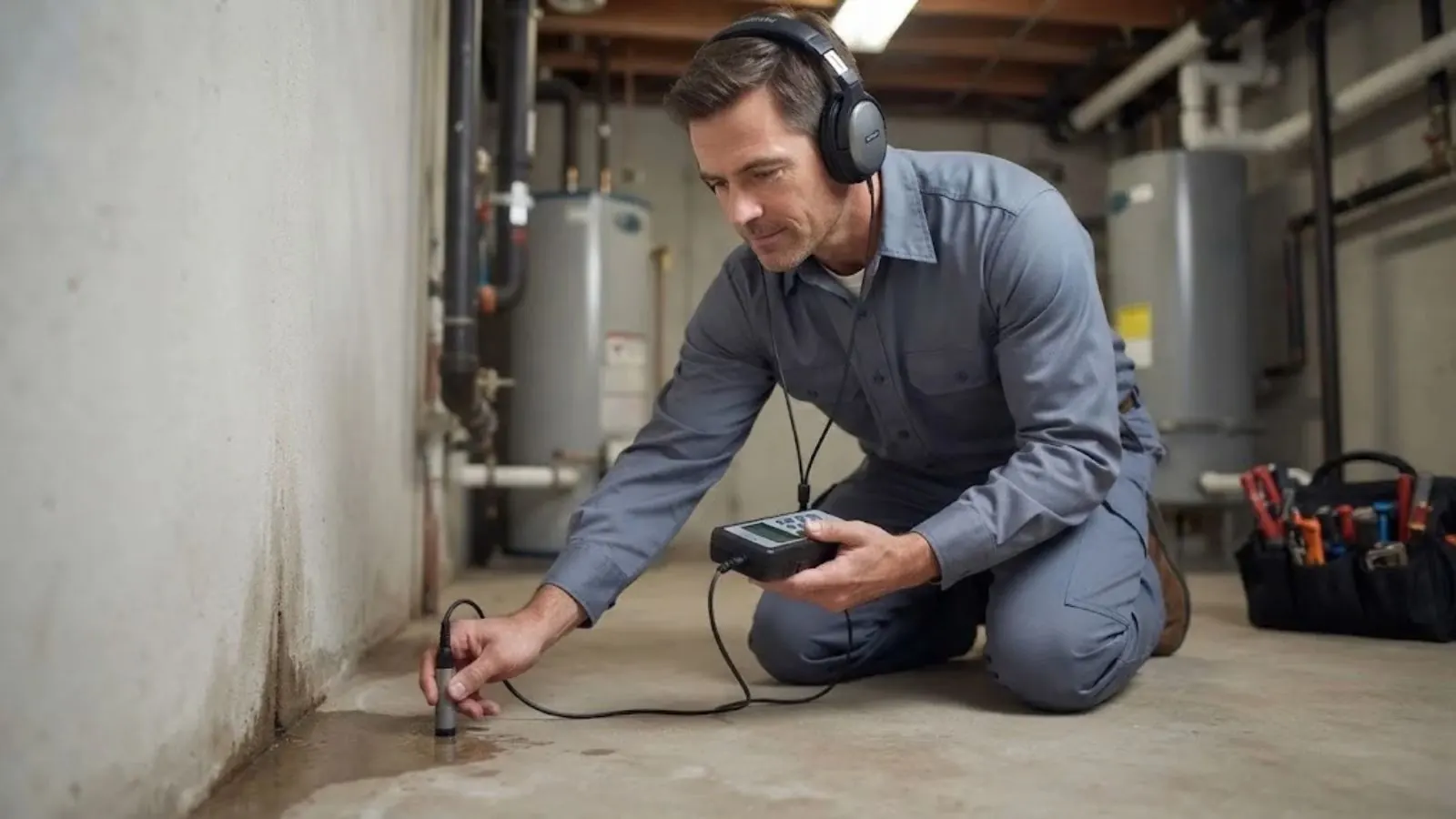
We start with a pressure test of the supply line to learn whether the leak is on pressurized supply or on a drain. Acoustic listening devices pick up the sound of escaping water through pipe and soil, a thermal camera shows temperature differences in wet materials, and a moisture meter confirms what the camera suggests.
For a leak in the yard between the street and the house, tracer gas or ground microphones narrow it to a small patch. We mark the spot and explain whether repair means a small hole or a wider dig. For leaks on the service line itself, see water service line repair.
Common leak sources and the tool that finds them
Different leaks leave different signatures.
| Where it hides | Typical clue | Best first tool |
|---|---|---|
| Behind a wall or ceiling | Stain, bubbling paint, musty smell | Thermal camera and moisture meter |
| Under a slab or crawlspace floor | Warm spot, sound of running water | Acoustic listening |
| Between meter and house | Meter spins, wet or soft ground | Pressure test, ground microphone |
| Toilet or fixture | Bill rises with no sign of water | Dye test, shutoff isolation |
| Irrigation or outdoor spigot | Pressure drop in summer | Zone isolation and pressure test |
What affects the price of leak detection
We quote the detection separately from any repair.
Standards and safe digging
Finding a leak is diagnostic, but repairs follow the 2021 International Plumbing Code (IPC), which the 2022 Connecticut State Building Code adopts. Before anyone digs to reach a buried line, call 811 so underground utilities are marked first. Whether a permit is needed depends on the job and the town, and the Enfield building department can confirm it.
Hidden leaks in Enfield's older and newer houses
Houses in Thompsonville and Hazardville range from the 1800s to newer construction, and the supply piping inside an older house may have been changed in stages. Where one material joins another, a joint can fail beside a section that was repiped, which is why we trace the whole run before we replace one part.
Before any digging outside, Connecticut requires notice to 811 at least two full business days ahead. We handle that call, and the same method serves homes in Somers and Ellington.
Leak detection questions
Yes. Dispatch is open 24/7. An active leak is treated as an emergency, and we focus first on stopping the water and limiting damage.
Turn everything off and check whether the meter moves. If it does, you have a leak on the house side. If it does not, look at toilets and irrigation, or call for a pressure test.
Often yes. Acoustic and thermal tools narrow the search to a small area, so any opening is as small as it can be.
It is less common than in slab-on-grade regions, but it happens in houses and additions built on slabs. We confirm before suggesting one.
Yes. Give dispatch the unit, the symptom and who can provide access, and we coordinate the rest.