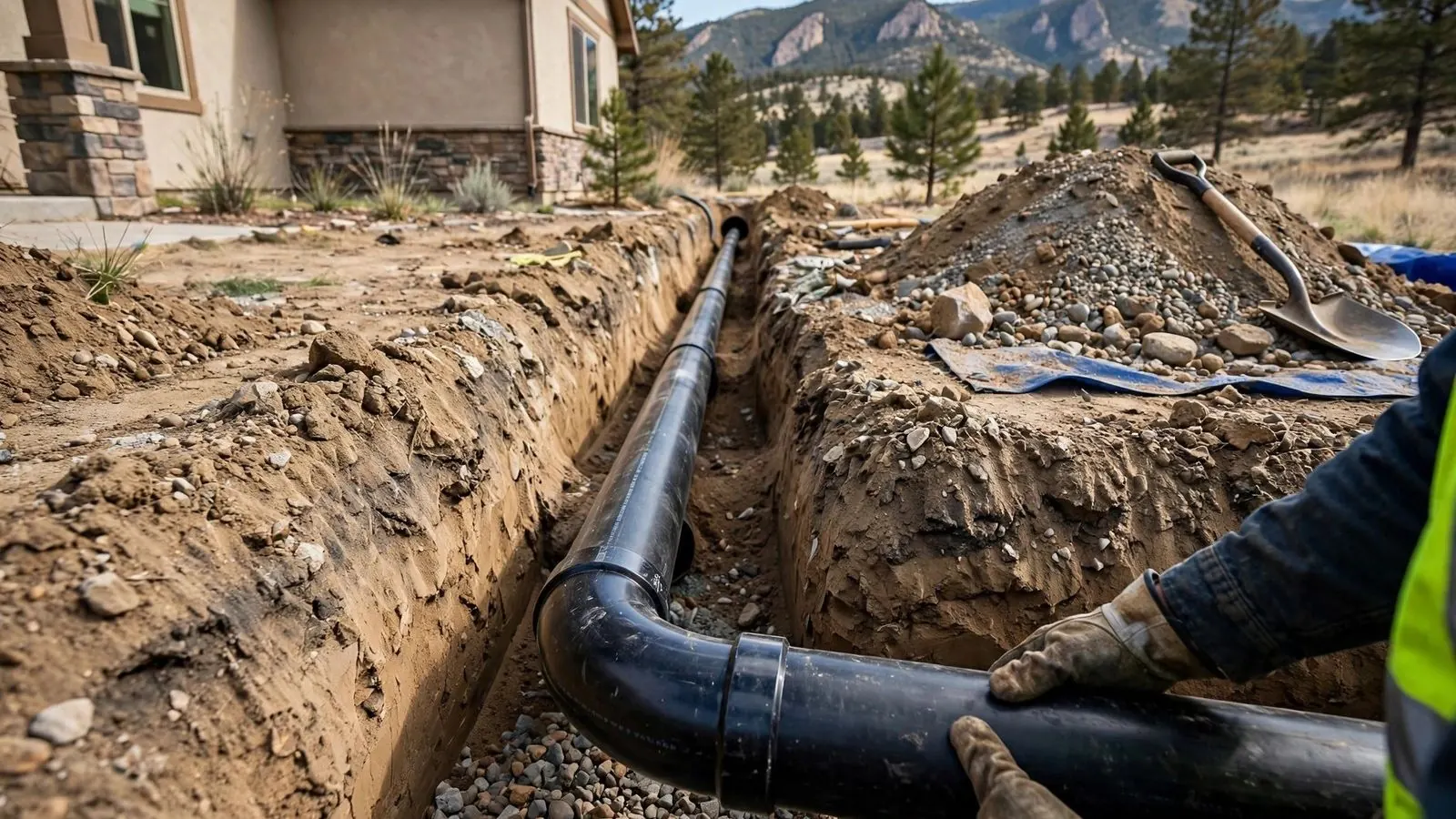
Signs your sewer line needs repair, not another cleaning
Gurgling drains, sewage smell in the yard, a wet patch of lawn between the house and street, and backups that return within weeks are all signs the pipe itself has failed. A pipe that is cracked or offset catches waste at the break, so every cleaning is temporary.
Cleaning still comes first, because it lets the camera see the pipe. Our sewer line cleaning visit clears the way and records the result.
Sewer pipe collapse: an emergency to treat quickly
A fully collapsed line sends everything backward into the house. Water goes down and does not return, or one fixture overflows every time another drains.
Take these steps while the crew is on the way.
- Stop all water use right away.
- Keep people and pets out of any room with standing wastewater.
- Do not dig in the yard yourself. Connecticut law requires notice to Call Before You Dig at 811 at least two full business days before mechanized digging.
- Photograph the damage for your insurer.
- Call (860) 397-8103 and tell dispatch how long the symptoms have been developing.
A repair estimate is only as good as the camera footage behind it. We show you the footage before you decide.
Call (860) 397-8103Repair options and how they compare
The right repair depends on what the camera shows, not on what is cheapest to describe.
| Option | Best for | Trade-off |
|---|---|---|
| Spot repair (dig and replace a section) | One cracked or offset joint | Needs a trench, usually the least expensive per foot |
| Pipe lining (cured-in-place) | Long runs with minor cracks or root entry | Less digging, but not for badly collapsed or bellied pipe |
| Pipe bursting or full replacement | Failed pipe along most of its length | Highest upfront cost, longest result |
| Cast iron pipe repair or sleeve | Corroded cast iron under the house | Depends on access and pipe wall condition |
How the repair decision gets made
We camera the line, mark the failure point with a locator and measure its depth. A section that is shallow and short is a spot repair. A longer run with root entry at several joints may suit lining. If the pipe has bellied or collapsed, replacement is the honest answer, because lining over a sag leaves the water where it was.
Where the sewer is shared by a downstream neighbor or crosses a driveway, we explain what that does to scope and permit steps before you commit. Rules vary, so ask the Enfield building department which permits your repair needs.
What drives the cost of sewer line repair
Sewer work is quoted from camera footage. These are the factors.
Permits and code for sewer repair
Replacing or relining a building sewer is code work under the 2021 International Plumbing Code (IPC), which the 2022 Connecticut State Building Code adopts, and digging requires a call to 811 first so buried utilities are marked. Whether a permit is needed depends on the job and the town, and the Enfield building department can confirm it. A camera inspection before the work confirms where the pipe has failed.
Older pipe in Hazardville and Thompsonville
Hazardville, Thompsonville and Enfield Village each include older homes, some documented as dating to the 1800s. An older house may have had plumbing work done in stages, and we identify the materials on site rather than assuming them.
Those transitions are where we most often find failures, and it is why we camera the whole line rather than assuming one fix will cover it. For properties in Suffield we apply the same method on older village lots.
Sewer repair questions
Yes. A collapsed or failed sewer line is a dispatch emergency at any hour. We stabilize the situation first, then plan the repair.
Not always. Lining and spot repair limit the trench. Replacement of a failed run does require excavation.
A spot repair is often a one-day job. Lining and replacement take longer and depend on length, access and utility marking.
Yes. We show it on site and you can ask us to keep a copy for your records or an insurance claim.
The town or utility is responsible for the public main. Your responsibility ends at the connection, and we help you tell where the problem sits.