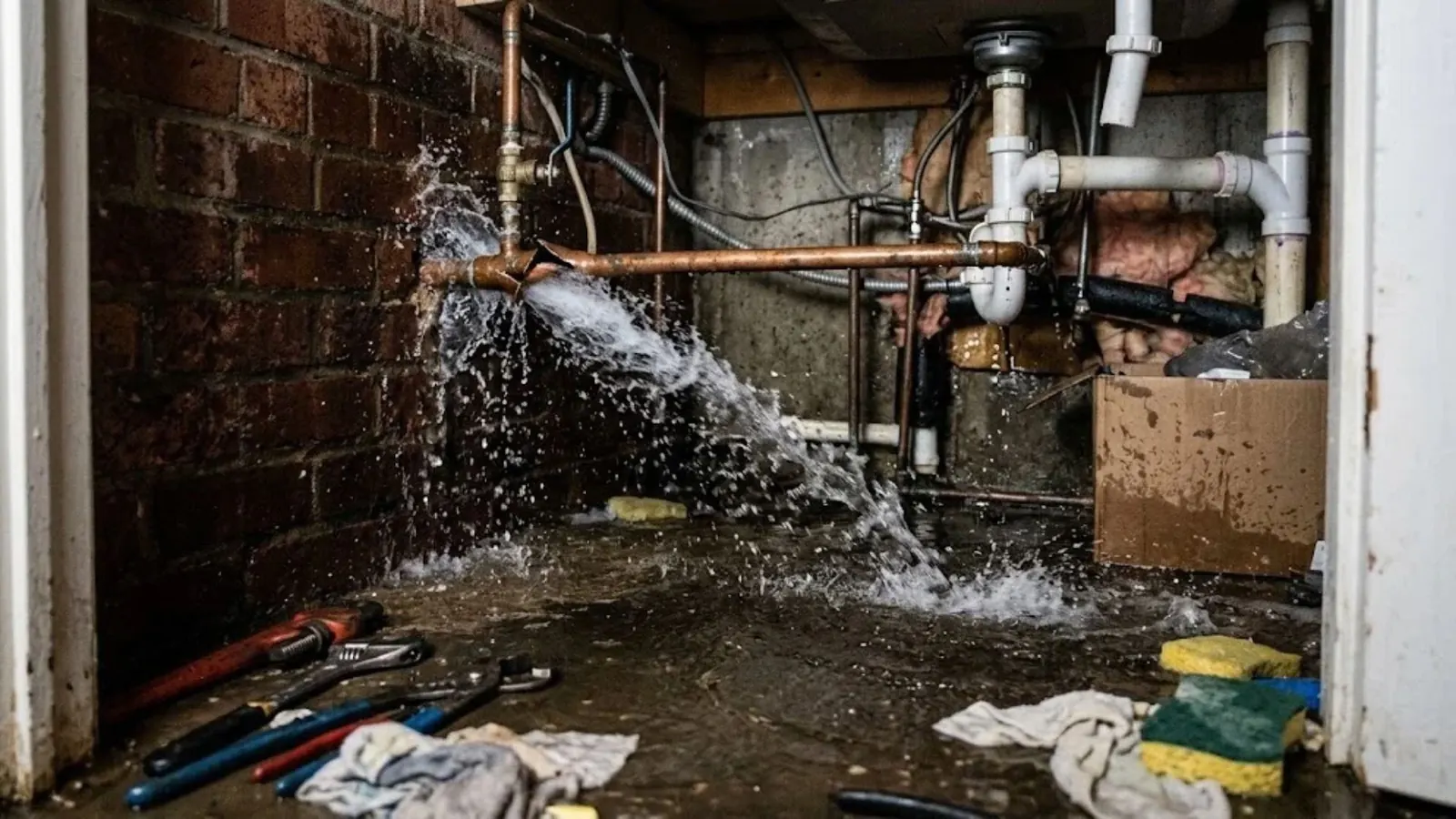
Burst pipe emergency: do this in the first ten minutes
Most of the damage from a burst pipe comes from how long the water runs before someone stops it. Know where the main shutoff is before an emergency, and test that it closes.
If water is flowing now, follow these steps in order.
- Close the main water shutoff. It is usually near the meter or where the line enters the house.
- Open the lowest faucet in the house to drain the remaining water out of the lines.
- Switch off power to flooded rooms only if you can reach the panel while standing on dry ground. Otherwise stay out and tell dispatch.
- Move furniture, rugs and electronics off wet floors and photograph everything for your claim.
- Call (860) 397-8103 and say where the pipe is and whether it is hot or cold water.
Why pipes burst in Enfield winters
Water expands as it turns to ice, and pipe walls cannot absorb the pressure. The burst usually happens not at the ice itself but between the ice plug and a closed faucet. Pipes in exterior walls, unheated crawlspaces, garages, and basements near uninsulated rim joists freeze first.
A burst can stay hidden while the pipe is frozen and then pour out when it thaws, which is why a house can seem fine at 6 a.m. and flood at noon. If you suspect a frozen line, keep the faucet slightly open and call before attempting to thaw it with open flame, which starts fires.
Every minute a burst pipe runs adds to the cleanup. Call first, then start moving belongings.
Call (860) 397-8103Frozen pipe repair: thawing without making it worse
A frozen pipe that has not burst can often be thawed safely with a hair dryer or heating pad, working from the faucet toward the frozen section. A pipe that has cracked needs a plumber, because thawing it just starts the leak. We check the pipe with a camera or pressure test before reopening it, and we cut out and replace any damaged section.
Repairs use copper, PEX or the material that matches the existing run. After the repair we look at why it froze, which may mean insulation, a heat source or rerouting a line. A pipe that bursts once in the same spot will do it again.
What a burst pipe repair involves
The steps vary with pipe material and location.
| Pipe type | How it fails | Typical repair |
|---|---|---|
| Copper | Splits lengthwise at the frozen spot | Cut out and replace the section with new copper or a PEX transition |
| PEX | Stretches and may survive freezing | Check fittings, replace any damaged section |
| Galvanized steel | Cracks at threads or corroded points | Replace the run, because the rest is likely worn |
| PVC or CPVC | Cracks when cold | Replace the cracked section and fittings |
| Water heater supply lines | Fails at fittings or connectors | Replace connectors and check the valve |
What affects the cost of burst pipe repair
We quote the repair before we begin, once the water is off.
Code requirements for pipe repairs
A permanent pipe repair should follow the 2021 International Plumbing Code (IPC), which the 2022 Connecticut State Building Code adopts, including approved pipe materials and fittings. The Connecticut Department of Consumer Protection licenses plumbers, so you can ask any plumber about their license before work starts.
Emergency shutoff and temporary stops come first, and code work follows once the water is controlled. If the cause is not obvious, water service line work or a failed water heater are common sources to rule out.
Cold weather and the towns we serve
Enfield borders Massachusetts and sits in the Connecticut River valley, and winter cold affects every house here. Any older home, including those in Thompsonville and Hazardville, can have pipes in exterior walls with little insulation. Newer houses in places like Ellington can have long runs through garages and over-garage rooms.
Kitchens and bathrooms over unheated garages are a common trouble spot, and we also see pipes freeze in vacation or rental units where the heat was lowered. For a repair that involves a leaking supply that is not frozen, see leak detection.
Burst pipe questions
Yes. Dispatch is open 24/7 and a burst pipe is treated as an emergency at any hour, including holidays and storms.
Look near the water meter, in the basement where the line enters, or in a utility closet. If you cannot find it, call and we will describe where to look.
A hair dryer or heating pad works on a pipe that has not cracked. Never use open flame, and call if you see any water.
Sudden bursts are commonly covered, but policies differ. Keep photos and receipts and call your agent early.
Insulate exposed pipes, seal gaps near rim joists, leave cabinet doors open on cold nights and keep the heat at a steady setting while away.