When a clogged drain is an emergency
One slow bathroom sink can wait until morning. Water rising in a basement floor drain, a toilet that bubbles when the washing machine drains, or two fixtures backing up at once points to a blockage in the main line, and that should not wait.
Until the crew arrives, these steps limit the damage and make the diagnosis faster.
- Stop using sinks, showers, the dishwasher and the washing machine.
- Skip chemical drain cleaner on a standing backup. It sits on the blockage and burns whoever opens the pipe next.
- Photograph wet floors and belongings now, because your insurance adjuster will ask for them.
- Note which fixtures are slow or gurgling. That pattern tells us whether the clog is in a branch or the main.
- Call (860) 397-8103 and describe the pattern to dispatch.
Why drains clog in older Enfield homes
Thompsonville and the Hazardville Historic District include some homes from the 1800s alongside newer ones, and a drain line in any older house may have been repaired or extended more than once. Where materials or joints change, grease and hair can catch and roots can find a gap. When the same drain blocks twice, the pipe is often the cause, not the household.
That is why a second blockage on the same line is our cue to recommend a sewer camera inspection before anyone pays for a third cable run.
A drain that is already overflowing is the wrong time to compare quotes. Dispatch answers all night and weekend calls.
Call (860) 397-8103Snaking, cabling and when we step up to jetting
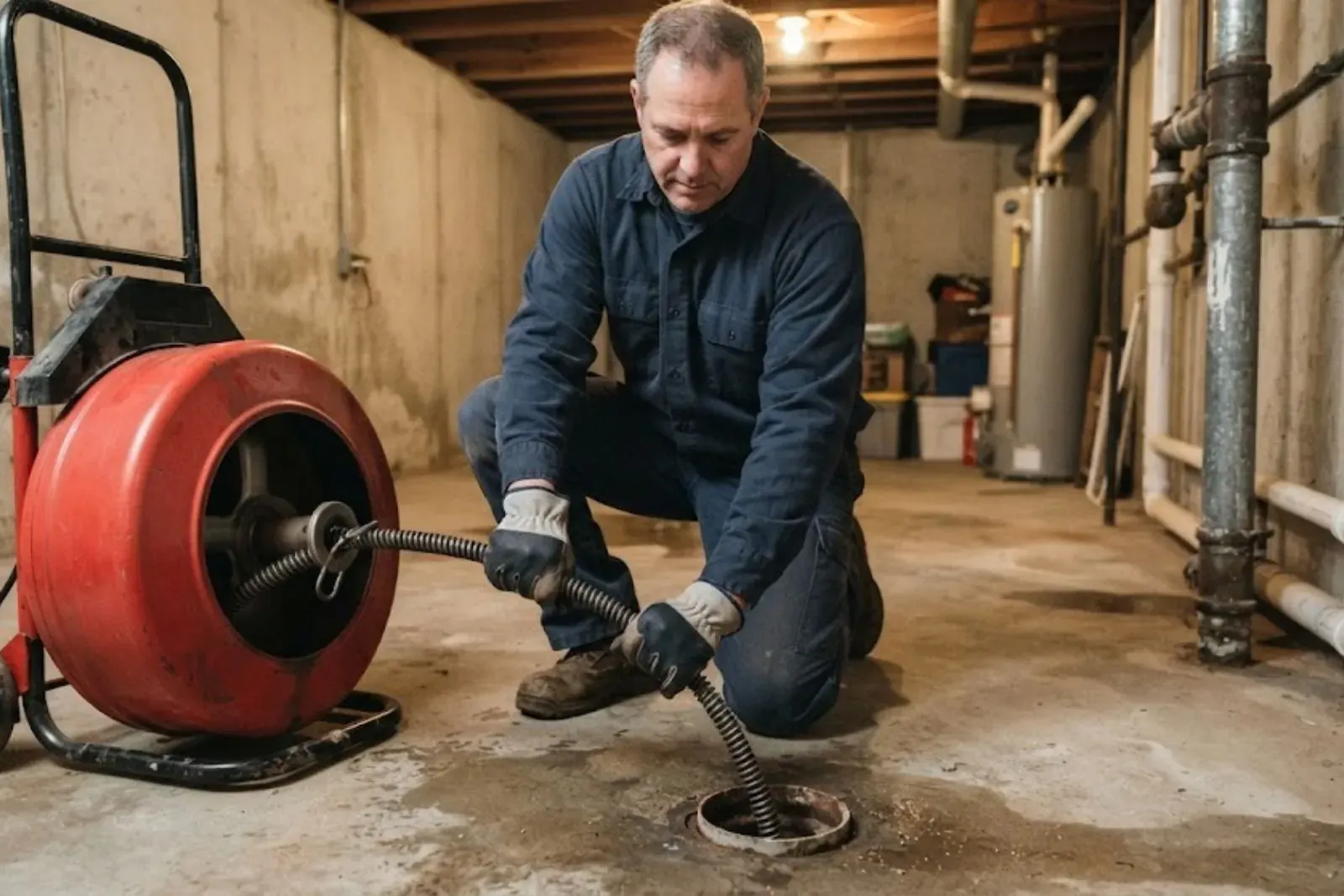
Small fixture lines get a cable with a cutting head sized to the pipe. A 1-1/2 inch kitchen trap arm takes a lighter cable than a 4 inch main, and using the wrong size either skips the clog or scars the pipe. We run the cable until the blockage breaks or is retrieved, then flush with water to confirm flow.
A cable can punch a hole through grease and leave the walls coated, so the drain slows again in weeks. In that case hydro jetting scours the full pipe wall, and sewer line cleaning covers the main out to the street.
Which fix fits which clog
Match what you see to the likely cause before you decide how much work to approve.
| What you see | Likely cause | Usual fix |
|---|---|---|
| One sink drains slowly | Hair and soap in the trap arm | Cable the branch or clean the trap |
| Kitchen sink and dishwasher back up together | Grease in the kitchen branch line | Cable, then jet if grease remains |
| Tub and toilet gurgle together | Partial blockage in the main | Main-line cable plus camera |
| Floor drain bubbles after laundry | Main blockage or roots | Camera, then jet or spot repair |
| Clog returns every few weeks | Damaged or belly in the pipe | Camera inspection and repair options |
What drives the cost of drain cleaning
We quote the work before we start. These are the factors that move the number.
Plumbing code and drain work
Drain and trap work in Connecticut is governed by the 2021 International Plumbing Code (IPC), which the 2022 Connecticut State Building Code adopts. That code sets how traps and vents must be arranged, which is why a slow drain is sometimes a venting problem rather than a clog. The Connecticut Department of Consumer Protection licenses plumbers, so you can ask any plumber about their license before work starts.
Drains, cleanouts and the town sewer in Enfield
The Town of Enfield runs its own Water Pollution Control Facility, and properties on the town sewer have a lateral between the house and the street main. Homes on septic have different failure points. Before any work we find your cleanout so we know which side of the connection the problem sits on.
We also clear lines for homeowners in East Windsor and Somers, so a call from just over the town line gets the same dispatch.
Drain cleaning questions from Enfield homeowners
Yes. The line is open 24/7, including holidays. A backup that is rising toward finished space is dispatched as an emergency, and we book same-day visits when the schedule allows.
A hardware-store snake usually reaches 25 feet of small pipe at best. A main line is 4 inches wide and often longer than that, so most homeowners stop at the cleanout and call.
Usually the blockage was punched through rather than removed, or the pipe has a belly or crack that traps debris. A camera shows which one it is.
If the cleanout on your line is full, the blockage is between it and the street or in the street main. If only the house fixtures back up and the cleanout is clear, the problem is inside the house.
Yes. Tell dispatch the unit and which fixtures are affected, and we coordinate access with the tenant.