Find the source before you fix anything
Water in a basement has several possible sources. A leaking supply line or a failed drain gives you water with no relation to the weather. Groundwater pushing up through the slab or in through the wall follows the rain. Condensation looks like a leak but forms on cold pipes and walls in humid weather.
We start with a leak detection check of the plumbing. If the water follows the weather and not the pipes, we look at the exterior grade, downspouts, the foundation and the drainage system before recommending anything.
Easy fixes to rule out first
Many wet basements trace to simple outdoor causes.
- <strong>Downspouts.</strong> Discharge should land several feet from the foundation, not at its edge.
- <strong>Grade.</strong> Soil should slope away from the house.
- <strong>Gutters.</strong> Clogged gutters overflow and soak the wall.
- <strong>Window wells.</strong> They need drainage and a cover.
- <strong>Dehumidifier.</strong> If the cause is humidity, a unit may solve it.
A basement that is wet only after rain needs a different fix than one that is wet all year. Call and we will help sort it.
Call (860) 397-8103Interior waterproofing options
Each option handles water differently.
| Option | What it does | Best for |
|---|---|---|
| Interior perimeter drain | Collects water at the wall and floor joint and routes it to a pit | Seepage along the floor edge |
| Sump pit and pump | Lifts collected water out of the house | Any basement with a drain system |
| Wall sealant or coating | Reduces dampness in the wall surface | Minor dampness, not active leaks |
| Exterior drainage fix | Moves water away before it reaches the wall | Runoff and grade problems |
| Crack repair | Seals an individual foundation crack | A single leaking crack |
How an interior drain system works
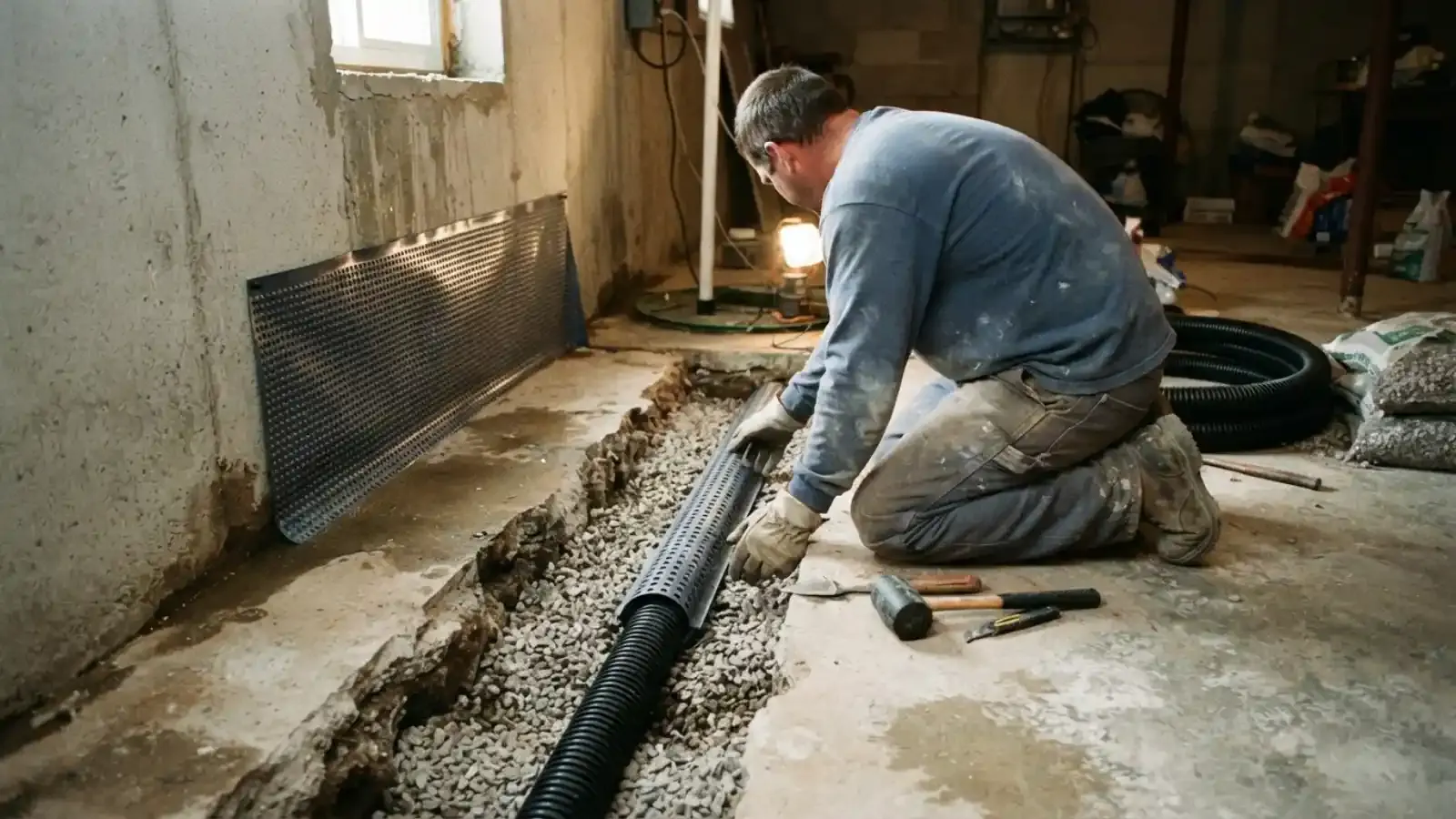
An interior system cuts a channel in the slab along the wall, lays a perforated pipe in gravel and runs it to a sump pit. Water that seeps through the wall or the floor joint drops into the pipe and is pumped out. The slab is then patched, and the drain stays out of sight.
The system only works if the pump keeps working, so it is paired with a sump pump, often with a battery backup. We do not recommend sealing a wall without a drain when active water is entering, because the pressure just finds another way in.
What to track before you call
You can help the diagnosis by keeping a short log. Note the date and time you see water, the weather in the previous day or two and exactly where it appears. A damp spot at the same corner after every storm points to a downspout or grade. Water in the middle of the slab after a long wet spell suggests groundwater under the floor.
Take photos with a ruler or a coin for scale, and look at the outside of the house on a rainy day. Where the gutters overflow and where the water pools tells us as much as the basement does. A bring-along list like this saves a visit and gets you a better recommendation.
What affects the price of basement waterproofing
Waterproofing is quoted by scope after a site visit.
Drainage standards and permits
Interior drains and sump systems that tie into plumbing follow the 2021 International Plumbing Code (IPC), which the 2022 Connecticut State Building Code adopts. Whether a permit is needed depends on the job and the town, and the Enfield building department can confirm it. Exterior excavation requires a call to 811 before digging.
Groundwater, rivers and Enfield basements
Enfield sits in the Connecticut River valley with the Scantic River in the south, and basements in low areas see more groundwater after storms than those on higher ground. A house near Powder Hollow or along the river corridors is more exposed than one on a rise.
Because the cause varies lot by lot, we look at the specific property before we recommend a fix. We do the same for homes in Somers and Ellington.
Basement waterproofing questions
If it happens when the weather is dry, check pipes. If it follows rain, the source is outside. We can test the pipes to tell.
Only if the cause is humidity. It will not stop liquid water coming through a wall or floor.
Not an active leak. It can slow dampness, but water under pressure will push it off.
Usually, if you collect water inside. The pump removes what the drain gathers.
Watch them in a rainstorm. If water spills over or discharges at the foundation, fix that first.