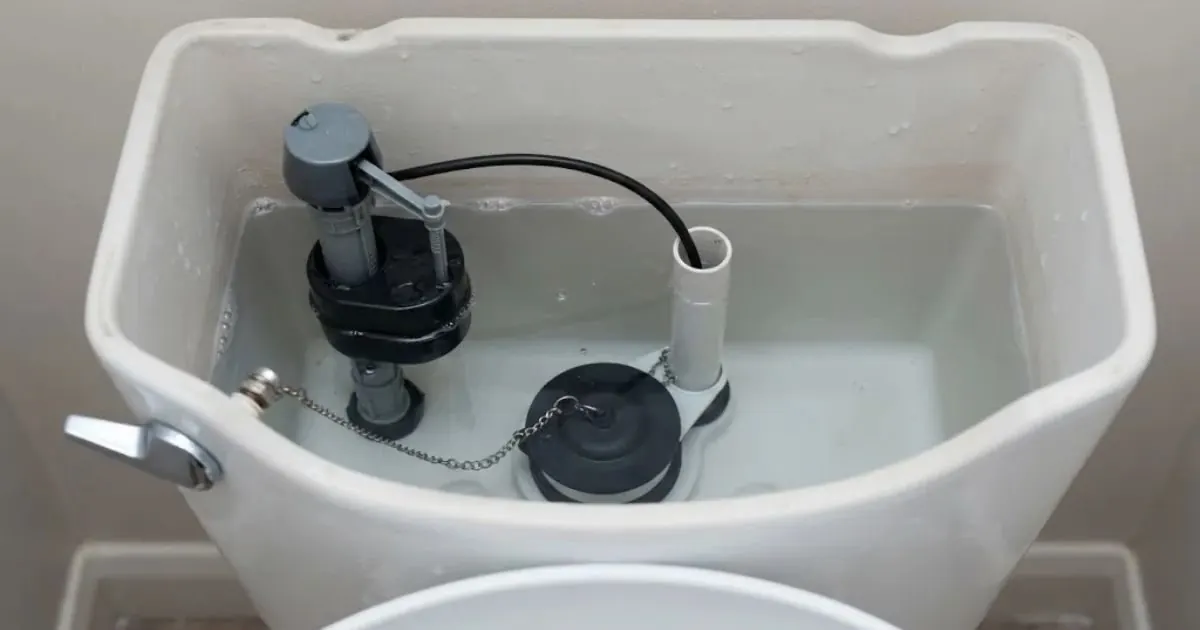
How a toilet handle actually works
The handle on the outside of the tank is the end of a short lever. The lever passes through a hole in the tank wall and ends inside with an arm. A chain or a small rod connects that arm to the flapper, the rubber seal at the bottom of the tank.
When you push the handle, the arm lifts the chain and the chain lifts the flapper. Water rushes from the tank into the bowl, and the flush starts. When the tank empties, the flapper drops back and the tank refills. Every part of this chain can wear, and the symptoms point to which one.
Match the symptom to the part
Start with what the handle does, then check the part listed beside it.
| What you notice | Likely cause | What to do |
|---|---|---|
| Handle is loose and wobbles | Mounting nut has backed off | Tighten the nut inside the tank |
| Handle sticks down or returns slowly | Corroded or bent lever, or a binding arm | Clean or replace the handle assembly |
| Handle moves but nothing flushes | Chain has come off the arm or is too slack | Reattach the chain and adjust the slack |
| Toilet flushes weakly even with the handle held | Chain too long, flapper not lifting fully | Shorten the chain a link or two |
| Toilet runs after the flush | Chain too short or snagged under the flapper | Add slack so the flapper seats fully |
| Handle cracked or snapped | Old plastic or metal fatigue | Replace the handle assembly |
A handle repair is easy to do yourself. A toilet that overflows or leaks at the base is the time to call.
Call (860) 397-8103How to replace a toilet handle
Turn off the water and empty the tank
Close the valve on the wall behind the toilet by turning it clockwise. Flush once to empty the tank, and hold the handle down so most of the water leaves.
Unhook the chain
Lift the tank lid and set it somewhere safe, because the porcelain chips easily. Unclip the chain from the lever arm inside the tank.
Remove the mounting nut
The nut that holds the handle usually has a reverse thread. Turn it clockwise to loosen it, which feels backward. Slide the old handle out through the front.
Fit the new handle
Push the new handle through the hole, thread on the nut by turning it counterclockwise and snug it by hand, then a gentle quarter turn with a wrench. Over-tightening can crack the tank.
Reattach the chain and test
Clip the chain to the new arm with about a half inch of slack. Turn the water back on, let the tank fill and flush a few times to check the motion and the seal.
Choosing the right replacement
Handles differ in where the lever sits, the length of the arm and the finish. Front-mount handles are the most common, while side-mount and angle-mount versions fit tanks where the lever comes out the side or the corner. Take the old handle to the store, or photograph the inside of the tank, so you buy a match.
Choose a handle with a plastic or brass arm over a thin metal one. Moisture inside a tank corrodes cheap metal, and a rusty arm is why the same handle fails every few years. If the nut is stripped or the tank hole is cracked, the better answer is a new tank hardware kit.
Signs the handle is not the real problem
Replace the handle first. If these symptoms continue, look deeper.
- <strong>The toilet keeps running.</strong> A worn flapper or a fill valve that does not shut off is the cause, not the handle.
- <strong>Water at the base.</strong> A failed wax ring or a loose bolt, which is a floor-level repair.
- <strong>Repeated clogs.</strong> The drain behind the toilet may be restricted, and a drain cleaning visit tells you more than a new handle.
- <strong>Cracks in the tank.</strong> A hairline crack that weeps is a reason to replace the tank or the toilet.
- <strong>A handle that fails every few months.</strong> Look at the tank's age and the hardware as a set.
When to call a plumber
A handle repair is a safe do-it-yourself job. A toilet that overflows, a base that leaks, a tank that cracks or a flange that is loose are not. Those problems let water reach the floor and the ceiling below, and the damage is worse than the repair.
If you are replacing a whole toilet and not just the handle, our toilet repair and installation visit covers the old unit's removal, the flange check and the new seal. Plumbers also check the shutoff valve, which is often stuck after years of disuse.
Quick checks while the tank lid is off
Once the lid is off, take two minutes to look at the rest of the tank. Check that the flapper sits flat on its seat and is not warped or sticky. Look at the fill valve to see if it shuts off cleanly when the tank is full, and watch the water level to make sure it stops below the overflow tube.
A flapper that is soft, curled or coated in slime is cheap to replace and is the most common cause of a toilet that runs. Catching it now means you do not have to open the tank again next month.
How long toilet parts last and how to make them last longer
Handles, chains and flappers are wear parts. A flapper commonly lasts several years, and a handle can last much longer unless it is corroded. Using in-tank cleaning tablets with harsh chemicals can shorten the life of rubber parts, so many plumbers advise against leaving them in the tank.
A yearly look at the inside of the tank, with the water off, is enough to catch most problems early. If you are replacing parts on an old toilet and several are worn, a complete tank repair kit often costs little more than one part and saves a second trip. We also repair and replace toilets for homes in Suffield and Ellington.
Standards and a safe approach
Toilet parts are standardized, and installation of the fixture itself follows the 2021 International Plumbing Code (IPC), which the 2022 Connecticut State Building Code adopts. A handle or flapper repair needs no permit. The Connecticut Department of Consumer Protection licenses plumbers, so you can ask any plumber about their license before work starts.
Toilet hardware and water in Enfield homes
PURA's list of Connecticut water utilities shows both Connecticut Water and Hazardville Water serving Enfield, and the Connecticut Department of Public Health lists Hazardville's source as groundwater. Your supplier's annual water quality report tells you what is in your water, and mineral buildup on tank parts is a reason to read it. If you cannot find it, ask your water utility.
Toilets and shutoff valves in an older home, including those in Thompsonville, Enfield Village and Hazardville, may predate several remodels. A stuck shutoff valve under an old tank is common, and forcing it can break it. If yours will not turn, stop and call, because a broken valve floods the bathroom.
Toilet handle questions
The nut inside the tank has usually backed off, or the plastic lever has worn. Tighten the nut by hand, and replace the handle if it still wobbles.
The chain is probably too long, so the flapper closes before the tank empties. Shorten the chain a link at a time until the flush completes.
On most tanks, yes. Turn the nut clockwise to loosen it and counterclockwise to tighten.
You can, but you should close the supply valve anyway. If something slips, the tank refills while you work.
Older tanks sometimes use handles that are no longer common. A universal replacement kit often fits, and a plumber can advise on an older tank that needs full hardware.