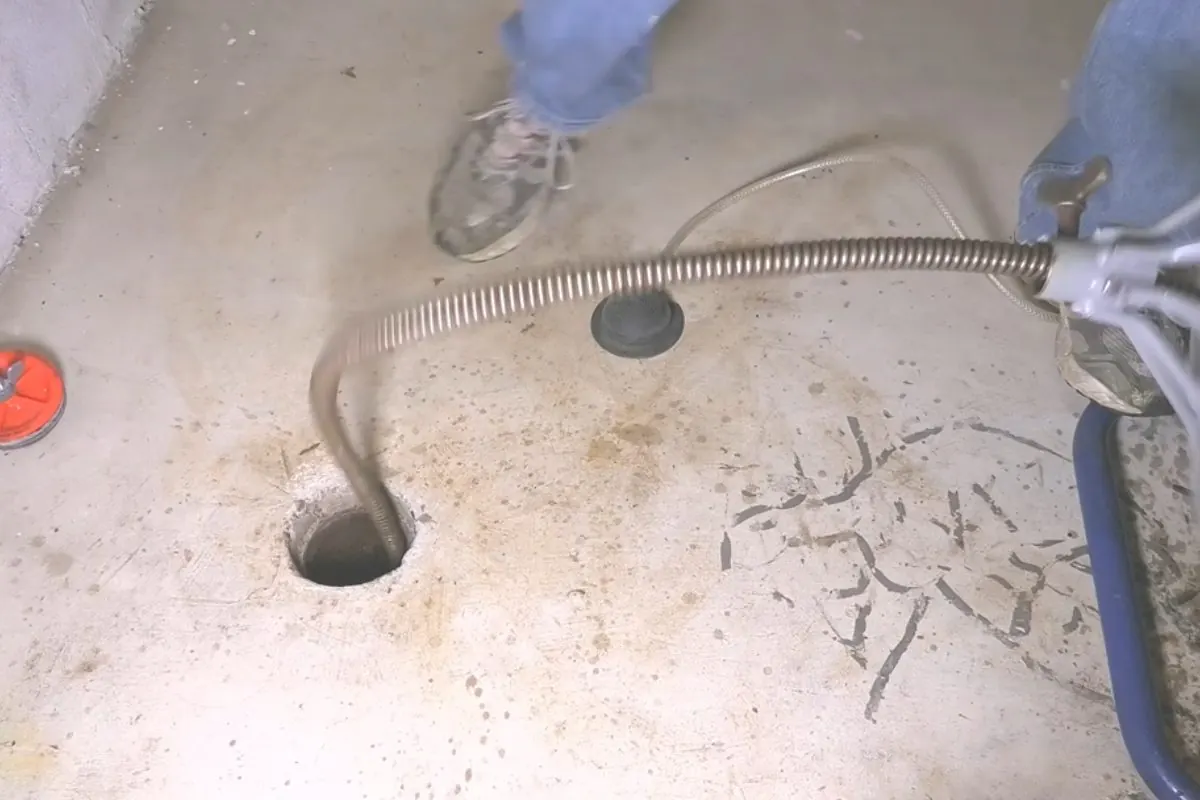
Types of drain snakes and what they suit
Match the tool to the drain.
| Tool | Best for | Limits |
|---|---|---|
| Plastic drain strip | Hair in a bathroom sink or tub drain | Short reach, no cutting |
| Small hand auger (about 15 to 25 feet) | Sinks, tubs, showers | Light cable can kink in a long run |
| Closet auger | Toilets | Made for the bowl, not other drains |
| Drum auger with a crank or drill | Branch lines and longer runs | Needs care to avoid cable tangling |
| Plumber's machine with a cutter head | Main lines and stubborn blockages | Heavy equipment, wrong use can damage pipe |
Matching the snake to the clog
Hair in a tub or bathroom sink is the most common clog, and a plastic strip with barbs often pulls it out in one pass. A kitchen sink clog with grease needs a cable, and hot water afterward helps flush the softened grease. A toilet clog needs a closet auger, which has a protective sleeve so the cable does not scratch the porcelain.
For a main line, a hardware-store snake is rarely enough. The pipe is wider and longer, and the blockage may be roots or a collapse. A main line problem calls for a heavier cable and usually a camera, which is where sewer line cleaning begins.
A snake clears many clogs. If it does not, call before you push harder.
Call (860) 397-8103How to use a drain snake safely
Prepare the area
Put a bucket and towels under an open trap, and wear gloves and eye protection. Remove the stopper or the strainer, and remove standing water if you can.
Feed the cable gently
Push the cable into the drain until you feel resistance. Turn the handle clockwise as you push, so the head works around bends.
Work the clog
When the cable meets the clog, turn and push in short strokes. If the cable resists and then gives way, the clog has broken or hooked.
Retrieve and clean
Pull the cable out slowly, turning as you go. Wipe it clean as it comes out, and expect hair or grease on the end.
Flush and test
Run hot water for a minute, then cold. If the water drains freely, the clog is cleared. If it slows again, stop and consider a camera.
Mistakes that damage pipes or hurt people
Forcing a cable against a hard obstruction can punch a hole in an old pipe or kink the cable until it springs back. Running a power drill on a long cable without control can whip it out of the drain. Never use a snake after chemical drain cleaner has been poured in, because the liquid in the pipe can splash and burn.
Another mistake is using a thin cable where a thick one is needed. A light cable bends and spins in a large pipe without touching the blockage. Using the wrong tool wastes time and gives you false confidence when the clog is still there.
Signs you should stop and call a plumber
Know when the job has outgrown the tool.
- <strong>The clog returns within weeks.</strong> The pipe may have a belly, a crack or roots.
- <strong>More than one fixture is slow.</strong> That points to the main line.
- <strong>The cable stops at the same distance.</strong> A collapse or an offset joint may be the cause.
- <strong>Water backs up from a floor drain.</strong> That is a main line problem, not a sink problem.
- <strong>Sewage smells or wet ground in the yard.</strong> The pipe may be broken, see sewer inspection.
What the plumber's machine does differently
A professional machine has a stronger motor, a longer cable and cutter heads sized to the pipe. It breaks through grease and roots that a hand tool only pokes. After cutting, we flush the line and, where the pipe allows, run a camera to see what caused the blockage and whether the pipe is sound.
If grease or scale lines the full pipe wall, a cable alone leaves most of it behind, and hydro jetting cleans the wall. The right choice depends on the pipe and the cause, and we explain it on site.
Protecting your pipes from the next clog
Prevention is easier than clearing. Use a hair catcher in the tub and shower, scrape plates before washing, and keep wipes, cotton and dental floss out of the toilet, even when the package says flushable. A monthly flush of hot water down kitchen and bathroom drains also helps keep soft buildup moving through the pipe.
Kitchen drains and the grease problem
Kitchen clogs differ from bathroom clogs. Grease cools in the pipe and builds up on the wall until the opening is small, and a snake pokes a hole through it without removing the coating. The drain runs for a while and then slows again as the grease closes the hole.
Hot water and dish soap flushed after a cable pass helps, but a heavily coated pipe needs more. Never pour grease down the drain, and wipe pans with a paper towel before washing. If the kitchen line slows every few weeks, the pipe wall needs cleaning, not another poke.
Cleaning and storing your snake
A snake that is put away dirty rusts and smells. Rinse the cable with hot water, wipe it dry and oil it lightly before you store it. Check the head for damage, because a bent or worn head can scratch the pipe. Store the drum in a dry place so the cable does not rust.
If you borrow or rent a larger machine, read the instructions and wear gloves and eye protection. Do not use a power drill on a long cable unless the tool is made for it. For anything beyond a sink or a tub, the safer choice is a professional visit.
Safety and limits of snaking
Snaking existing drains needs no permit, but replacing sections falls under the 2021 International Plumbing Code (IPC), which the 2022 Connecticut State Building Code adopts. Wear gloves and eye protection, because standing water in a clogged drain may contain leftover drain cleaner. The Connecticut Department of Consumer Protection licenses plumbers, so you can ask any plumber about their license before work starts.
Drains and septic systems in Enfield homes
Many Enfield homes are on the town sewer, and others are on septic systems, and the difference matters when a drain clogs. A septic system can back up because the tank is full, not because a pipe is blocked, and snaking will not help. The Town of Enfield can confirm which connection your address has.
Older houses in Thompsonville, Enfield Village and Hazardville can have drain lines of mixed age, and chemical cleaners and heavy snaking can stress them. We also clear drains in nearby East Windsor and Somers.
Drain snake questions
A plastic drain strip for hair or a small hand auger works for most bathroom sinks.
Use a closet auger, which has a protective sleeve. A regular snake can scratch the porcelain.
A short one of about 15 to 25 feet serves sinks and tubs. A main line needs a longer, heavier machine.
No. Chemical cleaner left in the pipe can splash and burn. Flush the line and wear protection, or call a plumber.
The snake may have poked a hole through grease, or the pipe may have a defect. A camera shows the cause.