Why you wait for hot water in the first place
When you open a hot tap, the water already sitting in the pipe is cold, because it cooled after the last use. You wait while that cold water runs out and hot water from the heater travels along the line to reach you. The farther the fixture is from the heater, the longer the wait.
A recirculation pump fixes that by keeping hot water moving, or by starting the flow on demand. The system does not change how hot the heater makes the water. It changes how quickly that water reaches the fixture.
Types of recirculation systems
Each type suits a different house.
| Type | How it works | Best for | Trade-off |
|---|---|---|---|
| Dedicated return line | A second pipe returns water from the farthest fixture to the heater | New builds and open framing | Needs an extra pipe run |
| Under-sink comfort system | A pump at the farthest fixture moves hot water back through the cold line | Houses with no return pipe | Warms the cold line, so the cold tap runs warm for a moment |
| On-demand with a button or sensor | The pump runs only when you press a button or walk in | Homes that want to limit running time | Short wait after the request |
| Timer or thermostat controlled | The pump runs on a schedule or when the line cools | Households with a regular routine | Uses more energy if set too widely |
A recirculation system is a small plumbing project with a few real trade-offs. We explain them before we install anything.
Call (860) 397-8103What installation involves
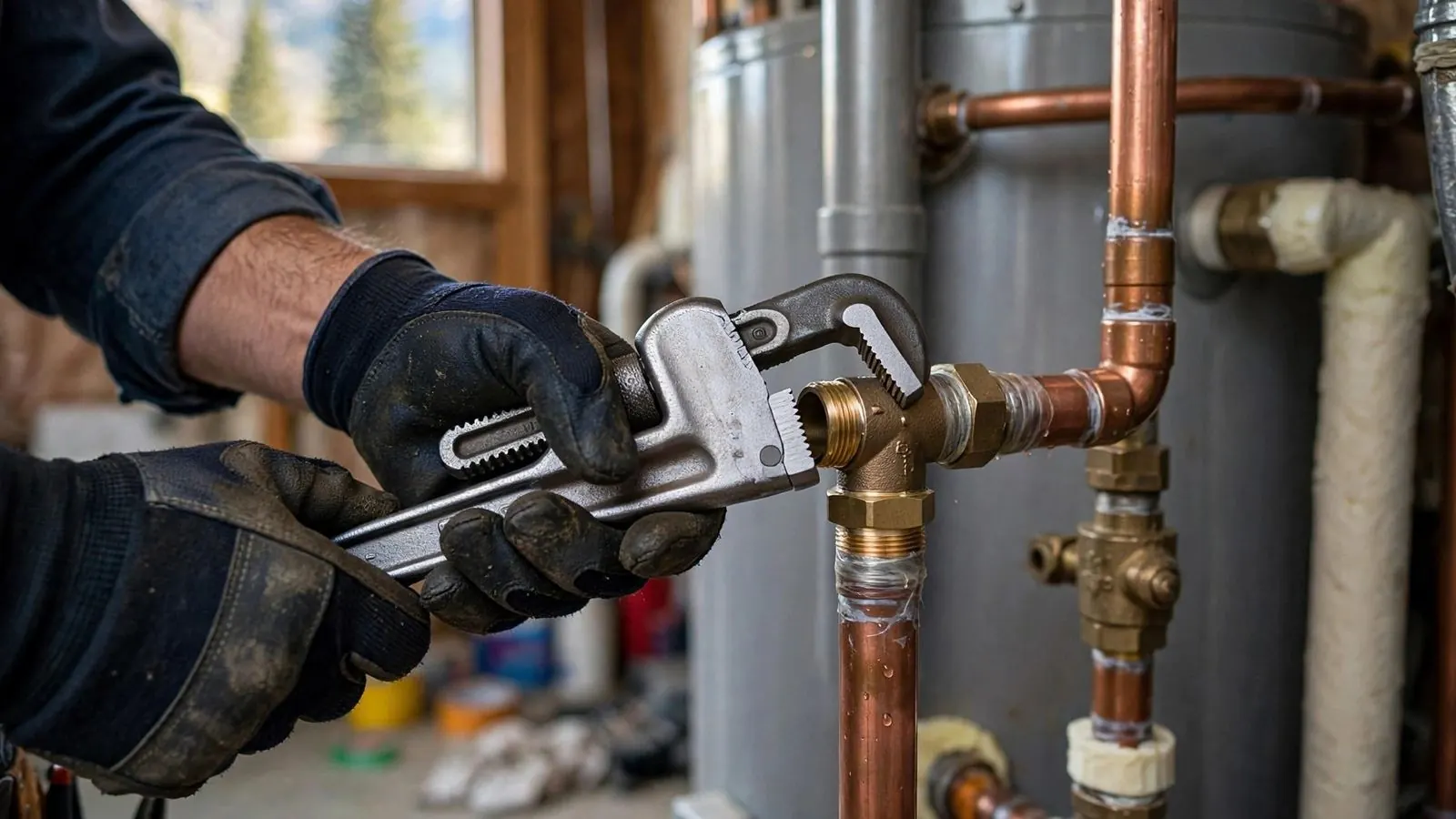
On a house with a return line, a small pump goes on the line near the heater, with a check valve and often a timer or aquastat. The work is simple when the return pipe already exists. On a house without one, the under-sink kit is the common route. A pump and valve are placed at the farthest fixture and a small connector links the hot and cold lines.
Either way, the pump needs power, so the plumber checks for an outlet nearby. We also look at the heater. Some tankless units need a specific recirculation setup, and the manufacturer's instructions decide what is allowed.
Questions to settle before you buy
These decide whether a pump helps or only adds a noise.
- <strong>How long is the wait now?</strong> A short wait is not worth a pump. A wait of a minute or more is.
- <strong>Where is the farthest fixture?</strong> A pump helps most when one bathroom is far from the heater.
- <strong>Is there a return line?</strong> It decides which kit you can use.
- <strong>What heater do you have?</strong> A tankless unit has its own recirculation rules, see tankless water heaters.
- <strong>How will it run?</strong> On demand, timer or continuous changes the energy use.
Costs, savings and the honest trade-offs
A recirculation pump saves the water you used to pour down the drain while you waited. It also uses electricity to run the pump and loses some heat from the pipe, so the energy cost can offset part of the saving. An on-demand system keeps that cost low, and a continuously running pump on an uninsulated line is the least efficient choice.
Insulating the hot water pipes makes any system work better, because the water stays hot longer. If your house has long runs through a cold basement, the pipe insulation may be the first step, and the pump a second.
Problems to watch for after installation
A noisy pump, a warm cold tap and a heater that seems to run more often are the common complaints. Noise usually means air in the system or a pump set too high. A warm cold tap is built into the under-sink design, and a thermostat or a timer limits it.
Corrosion is the other risk. Pumps in a home hot water line need to be made for potable water, with bronze or stainless parts, because an iron pump will rust. We check the pump rating before we install one. For a related look at hot water problems, see water heater repair.
A simple test before you spend money
You can measure your own wait. Run the hot tap at the farthest fixture, time how long it takes for the water to turn hot, and catch the cold water in a bucket. Multiply by how often you use that fixture. The result shows how much water and time a pump could save.
If the wait is under thirty seconds, insulation and patience may serve you better. If it is over a minute, and the fixture is used daily, a pump starts to make sense. Write the numbers down so you can talk through them with the plumber.
Insulation, valves and the details that make a system work
A pump moves water, but insulation keeps it hot. Foam sleeves on the hot water lines in a basement or crawlspace cut heat loss and help any recirculation system. A check valve prevents hot water from flowing backward into the cold line, and a thermostat or timer stops the pump from running when it is not needed.
These small parts decide whether the system feels like a luxury or a nuisance. We size the pump to the length of the loop, because an oversized pump is noisy and wears the pipes, and an undersized one does not move the water.
Code and efficiency notes
Recirculation lines are part of the hot water system and follow the 2021 International Plumbing Code (IPC), which the 2022 Connecticut State Building Code adopts. The US Department of Energy notes that recirculation can raise energy use unless it is controlled by a timer or sensor. Whether a permit is needed depends on the job and the town, and the Enfield building department can confirm it.
Recirculation and water supply in Enfield
PURA's list of Connecticut water utilities shows Connecticut Water and Hazardville Water serving Enfield. The Connecticut Department of Public Health lists Hazardville's source as groundwater. Ask your supplier for its water quality report before you choose a pump, because mineral content affects how quickly parts scale up. If you cannot find a number, ask your water utility.
A bathroom far from the basement heater is the situation a pump suits best, and it can come up in any Enfield home, including older ones in Thompsonville and Enfield Village. We also install them in nearby Somers and Ellington, where newer houses may already have a return line.
Recirculation pump questions
No. The heater's setting decides the temperature. The pump moves hot water to the tap faster.
A little. A pump that runs on demand uses little, while one that runs all day on an uninsulated line uses more.
Often yes, but the manufacturer sets the rules, and some units need a built-in or buffer tank setup. We check the model first.
In an under-sink system, the pump sends hot water back through the cold line, so the cold tap runs warm for a moment. A thermostat on the pump limits it.
Yes, because the under-sink kit needs no new pipe in the wall. We check the layout first.