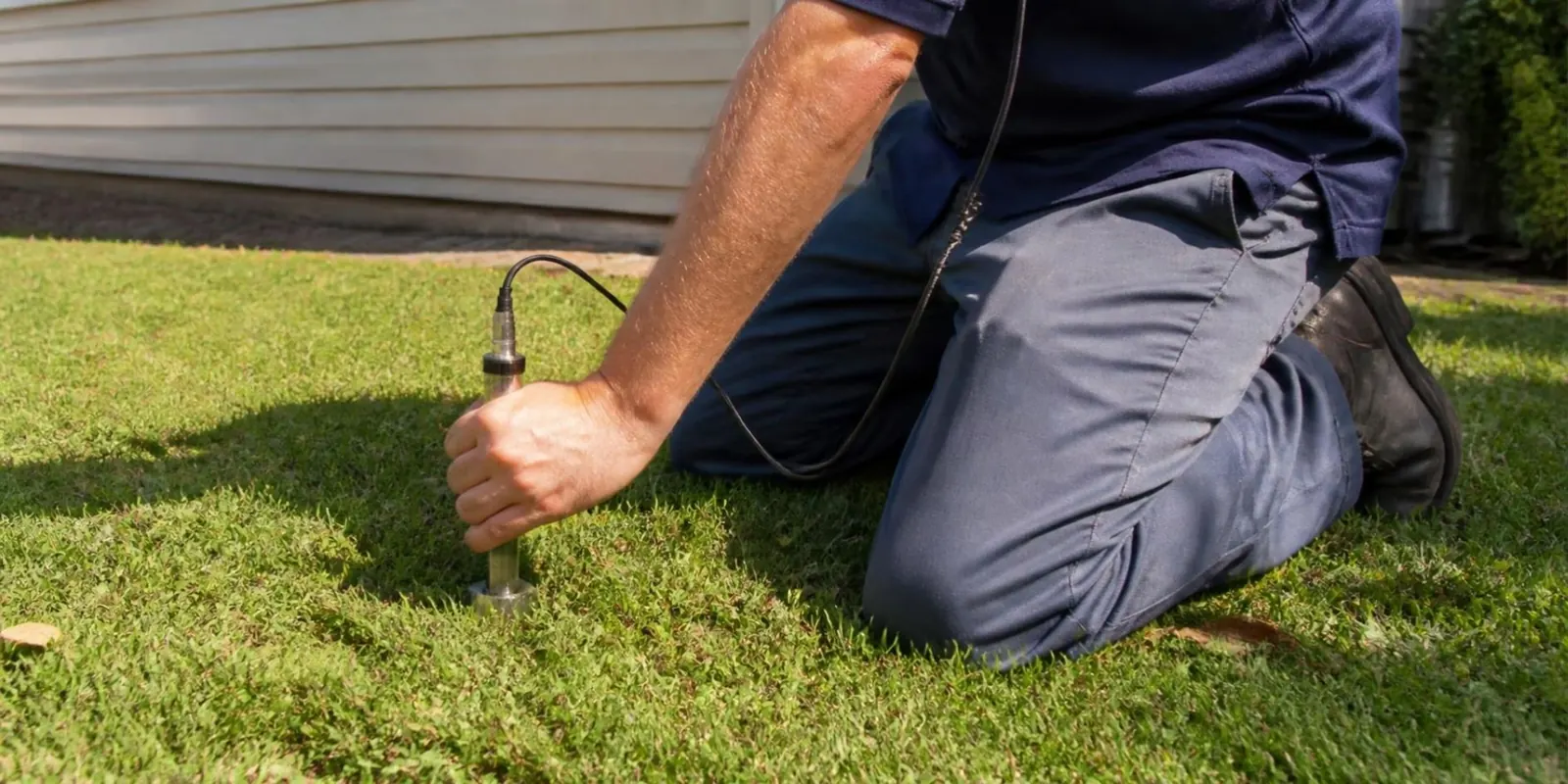
Why detection is a separate job from repair
Detection answers one question, which is where the water is escaping. Repair is a different job with its own cost. A detector who finds the break to within a few feet means the excavation is small, and a detector who guesses means a bigger hole and more restoration.
That is why detection is quoted separately. A plumber may offer detection and repair together, and you should still see the cost of each part. The money spent on detection usually pays back in a smaller dig.
Tools used to find buried leaks
Different leaks leave different signatures, so more than one tool is common.
| Tool | What it does | Best for |
|---|---|---|
| Pressure test | Shows if the line holds pressure | Confirming a leak on the supply line |
| Acoustic listening | Hears escaping water through pipe and soil | Narrowing the location |
| Ground microphone | Picks up the sound at the surface | Lines in yards and under slabs |
| Tracer gas | Gas introduced into the line escapes at the break | Hard-to-hear leaks |
| Thermal camera | Shows temperature differences | Hot water leaks and radiant heat |
| Pipe locator | Traces the path of the buried line | Finding the route before digging |
Finding the leak first can save you from opening the wrong part of the yard. Call and we will plan the search.
Call (860) 397-8103Factors that set the price
No firm quote exists until you answer these.
- <strong>Where the leak is.</strong> A yard line is simpler than a line under a slab or a driveway.
- <strong>Length of the suspected run.</strong> A longer line takes more time to test.
- <strong>How many tools are needed.</strong> A simple test may be enough, and a hard leak may need several.
- <strong>Access.</strong> Finished floors, landscaping and hardscape limit how directly we can listen.
- <strong>Time of the call.</strong> After-hours work follows a different rate.
Signs that point to an underground leak
A water bill that climbs with no change in habits is the most common sign. A meter that moves with every fixture off, a wet or soft patch in the yard, an unusually green strip of grass, low pressure and the sound of running water near the meter are others. Water on a driveway or a crack in a slab can also point to a buried break.
Before you call, check the obvious things. Toilets that run, an outdoor spigot that drips and an irrigation system can all cause a high bill. A quick shutoff test sorts house-side leaks from underground ones. Our water service line repair page covers the repair of a buried line.
How to compare quotes without being misled
Ask what tools the company uses and what you receive. A good detection report names the location, the depth if known and the method used. Ask whether the quote includes marking the spot at the surface, whether a repeat visit is charged and what happens if the leak cannot be found.
Be careful with any quote that bundles detection and a large excavation before the leak is located. You should know where the break is before anyone digs, and you should see why the chosen spot is the right one.
Meters, utility records and what you can check yourself
Before paying for detection, read your water meter. Turn off every fixture, check that nothing is running and watch the low-flow indicator or the dial. If it moves, water is leaking somewhere on the house side of the meter. Note the reading, wait an hour with nothing running and read it again.
Your water supplier owns the meter and often the line to it, and you own the pipe from the meter or curb valve to the house. That boundary matters for who repairs what, and your supplier can tell you where it sits for your address.
Why a small leak is worth chasing early
A slow underground leak rarely stays slow. Water softens the soil around the pipe, the pipe settles and a small hole becomes a larger one. The water you pay for and never use adds up, and the wet ground can undermine a driveway, a walkway or a foundation. Finding a leak early keeps the repair small and the dig short.
Slab leaks and leaks inside the house
Not every hidden leak is in the yard. A leak under a slab or in a wall can behave the same way, with a high bill, a meter that moves and sometimes a warm spot on the floor. The tools are the same, and the cost depends on how much of the house must be opened to reach the pipe.
If hot water lines run in or under a slab, a warm patch on the floor and a water heater that runs constantly are clues. We confirm the leak and its location before we suggest options, and we explain whether a reroute is cheaper than opening the floor.
After detection: what repair choices look like
Once the break is located, the repair options become clear. A small dig and a coupling fix a single break in a good line. A line with many breaks may be better replaced. In some cases, a new line is routed around the old one without opening a driveway or a floor.
We lay out the choices with their costs and trade-offs, and you decide.
If the line is old galvanized steel or a material that has failed before, we say so, because a patch on a worn pipe often leads to a second leak within a few years. The detection report is a record you can keep, and it helps if you ever need to show an insurer or a buyer what happened and where. Keep it with your house records, along with photos of the excavation before it is filled.
Standards and call-before-you-dig
Locating a leak is diagnostic, and the repair follows the 2021 International Plumbing Code (IPC), which the 2022 Connecticut State Building Code adopts. Before any excavation, call 811 so buried utilities are marked. Whether a permit is needed depends on the job and the town, and the Enfield building department can confirm it.
Water supply and digging in Enfield
PURA's list of Connecticut water utilities shows Connecticut Water and Hazardville Water serving Enfield, and the Connecticut Department of Public Health lists Hazardville's source as groundwater. Your bill tells you which supplier you have, and that supplier owns the meter and curb valve. Before any digging, Connecticut requires notice to Call Before You Dig at 811 at least two full business days before mechanized digging.
A house in Thompsonville, Enfield Village or Hazardville may have a service line of any age or material. We also locate leaks for homes in Windsor Locks and Somers.
Underground leak detection questions
Usually we narrow it to a small area, and then open only that spot to confirm and repair.
A meter that moves with every fixture off and a wet patch in the yard are strong signs. A pressure test can confirm it.
It depends on the company. Ask for detection and repair as separate line items.
Often not, though some policies cover resulting damage. Check with your agent.
Yes, if the repair involves mechanized digging. The notice must be given at least two full business days ahead.