If a pipe has already burst
Water coming out of a split pipe can release a lot in a short time. Stopping it comes before cleanup, and the main shutoff is the key.
Follow these steps in order.
- Close the main water shutoff.
- Open the lowest faucet to drain the lines.
- Switch off power to wet areas only if you can reach the panel on dry footing.
- Move belongings off wet floors and photograph the damage for your insurer.
- Call (860) 397-8103 and describe where the water is coming from.
Signs that a pipe is frozen
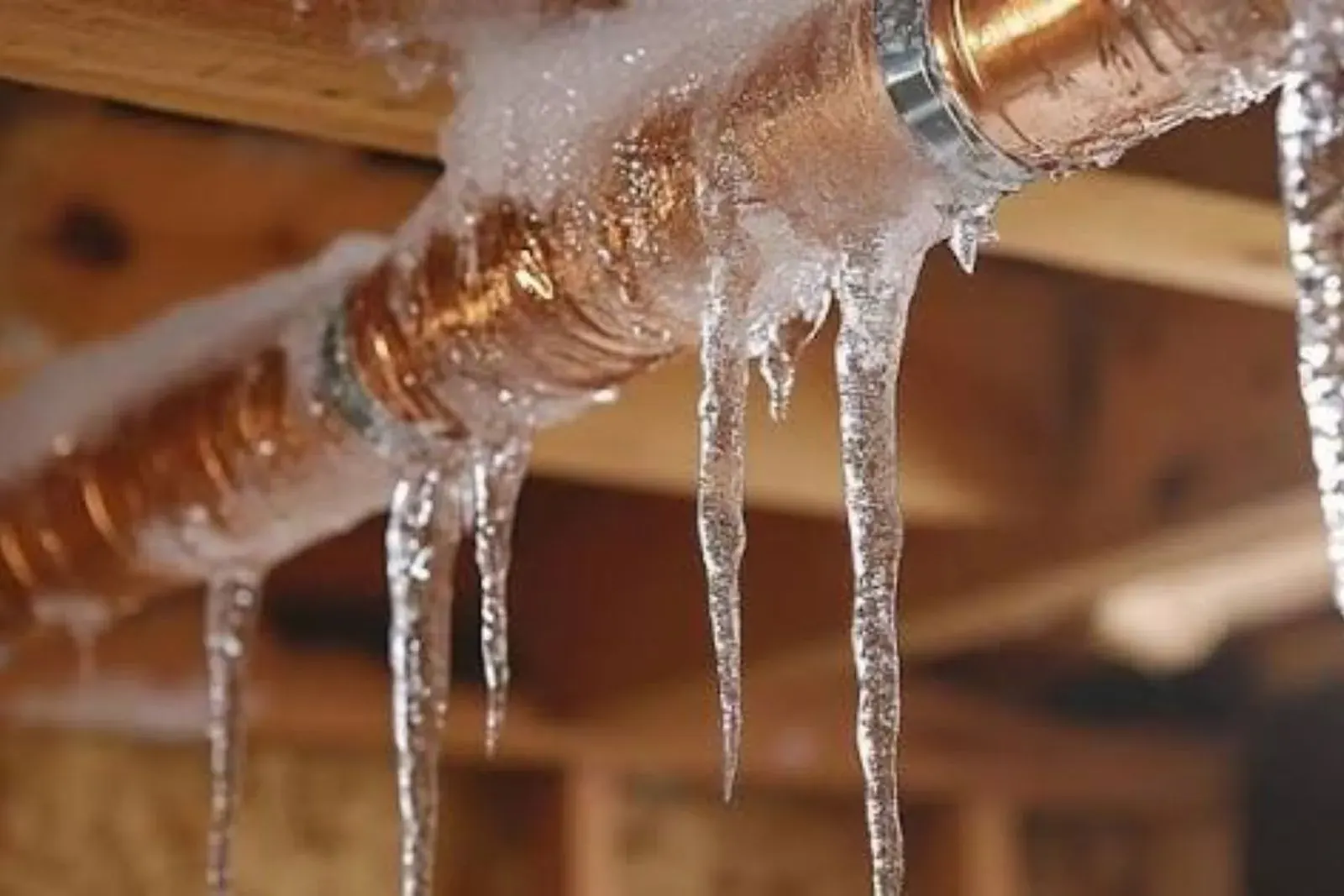
The clearest sign is a faucet that runs slowly or not at all in cold weather, when other taps work. Frost on a visible pipe, a pipe that is cold and stiff to the touch and a bulge in the pipe are other signs. Sometimes you hear a faint hissing or see an odd smell from a drain.
Pipes freeze first where cold air reaches them. Exterior walls, unheated basements and crawlspaces, garages, attics and the spaces behind kitchen cabinets on outside walls are the usual spots.
A frozen pipe is a warning. A burst pipe is an emergency, and our line answers 24/7.
Call (860) 397-8103How to thaw a frozen pipe safely
Open the faucet
Leave the tap open so water can flow as the ice melts, and so you see when flow returns. Melting ice also relieves pressure in the line.
Find the frozen section
Feel along the pipe for the cold or frosted spot. Start at the faucet side and work back toward the source.
Apply gentle heat
Use a hair dryer, a heating pad or warm towels. Move the heat along the pipe, working toward the frozen part. Never use an open flame, a torch or a propane heater, which can start a fire.
Check for leaks as it thaws
Watch the pipe and the area around it. If water appears, close the main shutoff and call a plumber.
Keep the water moving
Once flow returns, leave the faucet running a trickle for a while, and check other taps. If one pipe froze, others may be close behind.
Where pipes freeze and how to protect them
Prevention is cheaper than repair.
| Location | Why it freezes | Protection |
|---|---|---|
| Exterior walls | Little insulation, cold air behind the pipe | Insulate and keep cabinet doors open on cold nights |
| Unheated basement or crawlspace | Cold air from vents and gaps | Insulate pipes and seal gaps near the rim joist |
| Garage and over-garage rooms | Doors open, little heat | Insulate supply lines, keep the door closed |
| Outdoor spigot line | Water left in the line | Disconnect hoses and shut off the inside valve |
| Attic runs | Cold air above the insulation | Insulate the pipe and keep heat nearby |
Prevention before the cold snap
A few steps cut the risk. Disconnect garden hoses and shut off the inside valve to outdoor spigots, and drain them. Insulate pipes in unheated spaces with foam sleeves. Seal gaps where cold air enters near pipes, and open cabinet doors on exterior walls during a cold night so warm air reaches the pipes.
Keep the thermostat at a steady setting, day and night, and do not drop it far when you leave. Letting a faucet drip on a very cold night keeps water moving. If you will be away, arrange for someone to check the house, because a burst in an empty house runs until someone finds it.
After the thaw: repair and a hard look at why it froze
If a pipe split, a plumber cuts out the damaged section and replaces it with new pipe, then checks the rest of the run for weakness. We also look at why it froze. A pipe that froze once in a given spot will do it again unless the cause is fixed, whether that is a missing piece of insulation, a gap or a line that needs rerouting.
For a full description of the repair, see burst pipe repair. If the house has repeated freezing problems or old galvanized lines, a repiping plan is worth pricing.
A cold-night checklist for the whole house
On the coldest nights, a few minutes of attention pays for itself. Open the cabinet doors under kitchen and bathroom sinks on exterior walls. Let a faucet drip on the line farthest from the main shutoff. Check that garage doors are closed, that the basement windows are shut and that no vents are blowing cold air at a pipe.
If a storm may knock out power, know where your main shutoff is and how to close it. If your heat fails, call for service early and keep the house as warm as you can. A house that loses heat in a hard freeze can have pipes splitting within a day.
Insulation choices and what they do
Foam pipe sleeves are cheap and easy to fit on exposed pipes in unheated spaces. Fiberglass wraps work too, but they need a moisture cover. Heat tape, also called heat cable, is another option for a stubborn spot, and it must be installed as the instructions say, because misuse is a fire risk.
Insulation slows heat loss but does not make heat. A pipe in a space with no warmth at all can still freeze in a long cold snap. The best protection is warm air near the pipe, so keep the heat on and seal the gaps that let cold air in.
Thawing safety and code notes
Never use an open flame to thaw a pipe, because it can ignite framing and damage the pipe. Permanent repairs after a split follow the 2021 International Plumbing Code (IPC), which the 2022 Connecticut State Building Code adopts. The Connecticut Department of Consumer Protection licenses plumbers, so you can ask any plumber about their license before work starts.
Cold weather in Enfield and what to ask locally
Enfield winters bring hard freezes, and houses in the older sections of Thompsonville and Enfield Village often have pipes in exterior walls. If your water comes from Connecticut Water or Hazardville Water, your supplier can tell you about the meter and the curb valve, which belong to the utility. If a break is on the street side of your shutoff, call the supplier as well as a plumber.
Digging to repair a buried line requires notice to Call Before You Dig at 811 at least two full business days before mechanized digging. We serve frozen pipe calls in Enfield and in nearby Suffield and Ellington.
Frozen pipe questions
No. Many freeze and thaw without splitting. The danger is a pipe that splits and releases water when it thaws.
No. Open flames and high heat can start a fire or damage the pipe. Use a hair dryer or a heating pad.
It depends on the pipe's location, insulation and how long the cold lasts. Pipes in exterior walls and unheated spaces freeze first.
Often it covers sudden damage from a burst but not neglect. Check your policy and document the damage.
Keep the heat on at a steady setting, shut off and drain the water if you will be gone long and arrange for someone to check the house.