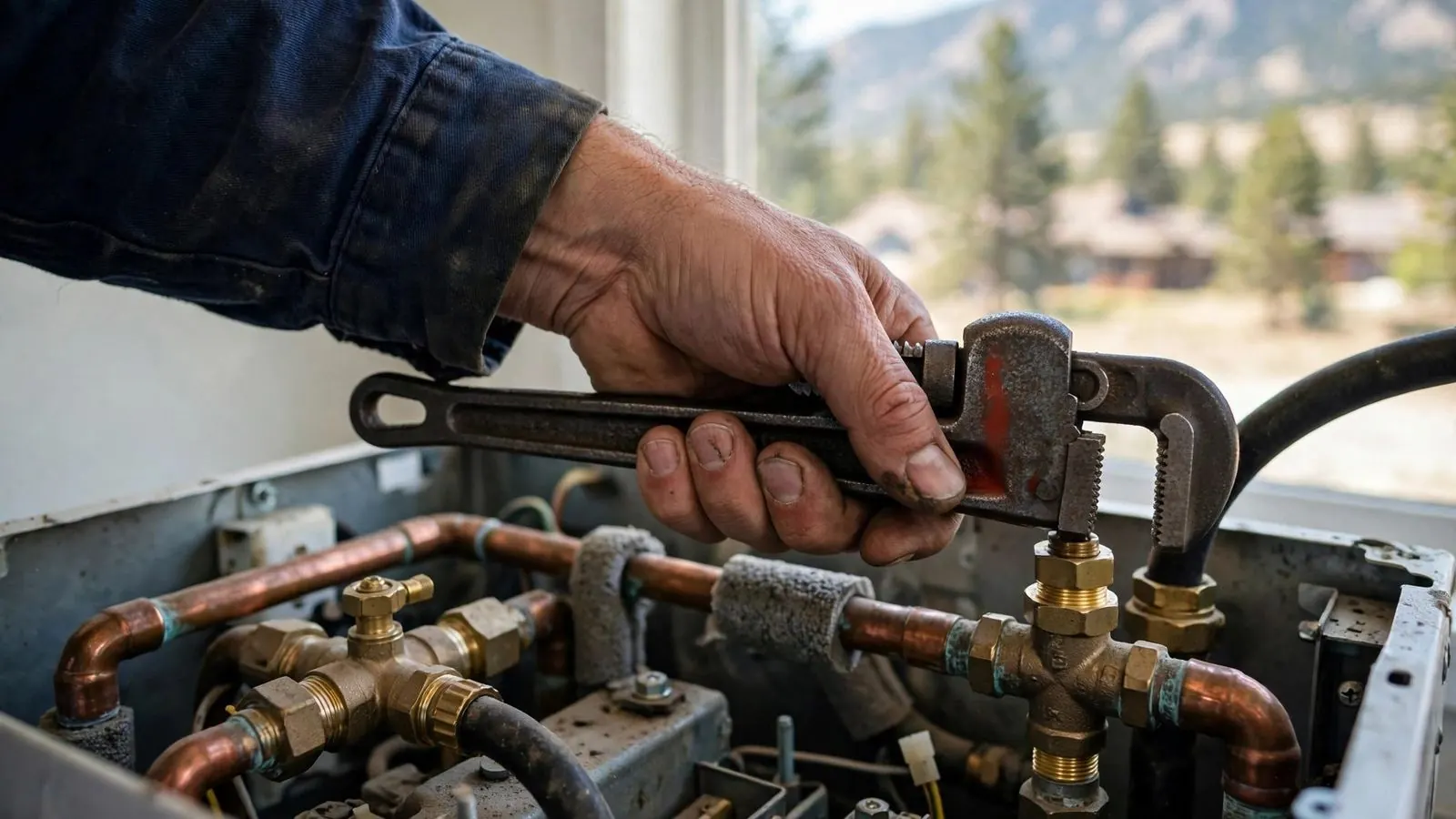
How a one-pipe system uses diverters
In a one-pipe hot water system, a single loop of pipe runs around the house, with each radiator tapped into it. A diverter tee at each connection is shaped so that some water is steered up into the radiator and then returns to the main loop downstream. The rest keeps flowing around the loop.
The design lets many radiators share one pipe, and it works as long as the tees are sound and the loop is full of water. The system also needs air removed, because trapped air stops water entering a radiator, which looks like a failed diverter.
Symptoms and likely causes
A cold radiator has several possible causes. Diverters are only one.
| Symptom | Likely cause | Next step |
|---|---|---|
| One radiator never heats | Air lock, closed valve or a failed tee | Bleed, check the valve, then inspect the tee |
| Radiators near the end stay cold | Restricted flow or failed diverters upstream | Check circulator and diverters |
| Radiators near the boiler run hot | Bypass flow, imbalance | Balance the system |
| Banging in the pipes | Air or scale in the loop | Purge and inspect |
| Leak at a tee | Corroded fitting | Replace the fitting |
| Boiler loses pressure | Leak or failed expansion tank | Find the leak |
A cold radiator in winter is the time to call. Our line answers 24/7 for heating emergencies, and we confirm what we can service.
Call (860) 397-8103Rule out the easy causes first
Before you suspect a diverter, check the simple things. Make sure the radiator valve is fully open. Bleed any air from the radiator with the vent key and watch for a spit of water. Check that the boiler is on, the thermostat is calling for heat and the circulator pump is running, which you can feel as a hum and warmth in the pipe.
If the pipe on both sides of a radiator is hot but the radiator is cold, the water is bypassing it. If the pipe feeding it is cold, the problem is upstream. A plumber can tell the difference in a few minutes with a thermometer.
What a diverter repair involves
The plumber isolates the loop, drains the section and cuts out the faulty tee. A new tee is soldered or fitted in the same place, with its arrow pointing the correct way. The loop is refilled, air is purged and the system is run and balanced.
The work is skilled, because the tee's direction and position matter. A tee installed backward or set too close to the next one will not divert properly. We also look at the isolation valves, because many older systems have none, and adding them makes the next repair much easier.
While the system is open: other items worth checking
A diverter repair is a chance to look at the whole loop.
- <strong>Circulator pump.</strong> A weak pump starves the end of the loop.
- <strong>Expansion tank.</strong> A waterlogged tank causes pressure swings and relief valve drips.
- <strong>Air vents and purge points.</strong> Trapped air is the most common cause of a cold radiator.
- <strong>Fill valve and pressure.</strong> Low pressure leads to poor circulation.
- <strong>Corroded fittings.</strong> Old iron and copper joints can leak soon after a repair elsewhere.
Knowing what is repairable and what needs a heating specialist
We work on the water side of a hot water boiler, which includes diverters, valves, circulators, expansion tanks and leaks. Burner and combustion problems are a different specialty, and we confirm on the call what we can service before we send a crew. If the boiler itself is failing, a plumber and a heating technician may need to work together.
For a broader view of what we handle, see boiler repair, and if a pipe has frozen because heat failed, burst pipe repair.
Signs you should shut the boiler down
Some symptoms mean stop. A boiler that is leaking steadily, a relief valve that discharges hot water, a gas smell or a burner that sooted and smells of smoke should be turned off at the service switch. For any gas smell, leave the house and call your gas utility or 911 first. Then call a professional before you restart the system.
Balancing a hydronic system after a repair
Once the diverter is replaced, the system needs balancing. That means adjusting the radiator valves so each room gets heat in a sensible order. Radiators near the boiler tend to take more flow, so their valves are closed a little to push water farther down the loop. We test by feel and by temperature after the system runs for a while.
A balanced system heats evenly and runs quietly. If rooms still lag, we look at the circulator, the pipe sizes and any partly closed valves. A heating system that has run for decades often needs small adjustments, and balancing is part of a good repair.
Winter planning for an older heating system
Do not wait for the coldest night to find a problem. Before the season starts, check each radiator, bleed any that are cold and look for drips at valves and tees. Check the boiler pressure and the expansion tank, and note anything unusual. A leak that is a drip in October can become a puddle in January.
Keep a record of your system, with photos of the boiler, the piping and the radiators. If something fails, the photos help a plumber understand the layout, and they save time on a cold day. For a house that is empty in winter, set the heat at a safe minimum and have someone check it.
If you own a rental, ask tenants to report any cold radiator or drip right away, because small problems grow quickly in a cold spell.
Safety rules for boiler work
Boilers combine heat, pressure and gas, so repair belongs with a licensed professional under local code. Water side piping follows the 2021 International Plumbing Code (IPC), which the 2022 Connecticut State Building Code adopts. If you smell gas, leave the building and call your gas utility or 911 first. The Connecticut Department of Consumer Protection licenses plumbers, so you can ask any plumber about their license before work starts.
Hydronic heat in older Enfield homes
Older houses in Enfield, including some in Thompsonville, Enfield Village and Hazardville, may have hot water heat that was added or updated decades ago, and some may use one-pipe loops. These systems last for decades but have parts that wear out, and a plumber who knows them can often keep one going. Ask the Enfield building office what permits a boiler or piping change requires.
To verify a plumber, use the state's elicense lookup at elicense.ct.gov. We serve homes in Enfield and in nearby Suffield and Somers, where older heating systems are common.
Boiler diverter valve questions
It steers part of the water in a one-pipe loop into a radiator and back to the loop. It lets many radiators share a single pipe.
It may have air in it, a closed valve or a failed tee. Bleed it first, then have the tee checked.
It involves draining the system and soldering, and the tee must point the right way. A plumber should do it.
No. A zone valve opens and closes a whole zone. A diverter tee is a fitting that steers flow into one radiator.
Often yes. They can last for decades with care, and a plumber can tell you what needs attention.